For seafood enthusiasts and coastal chefs alike, preparing raw conch often feels like a culinary battle of attrition. Traditional wisdom dictates that this dense, muscular mollusk requires either aggressive physical pounding with a heavy meat mallet or hours of agonizingly slow simmering to become palatable. Unfortunately, these brute-force methods frequently result in a compromised dish. Pounding shatters the delicate cellular structure, leaving jagged, bruised meat, while prolonged boiling leaches out the sweet, briny flavor that makes the ocean harvest so highly prized in the first place. You are left chewing on a rubbery disappointment, wondering if the culinary effort was truly worth the reward.
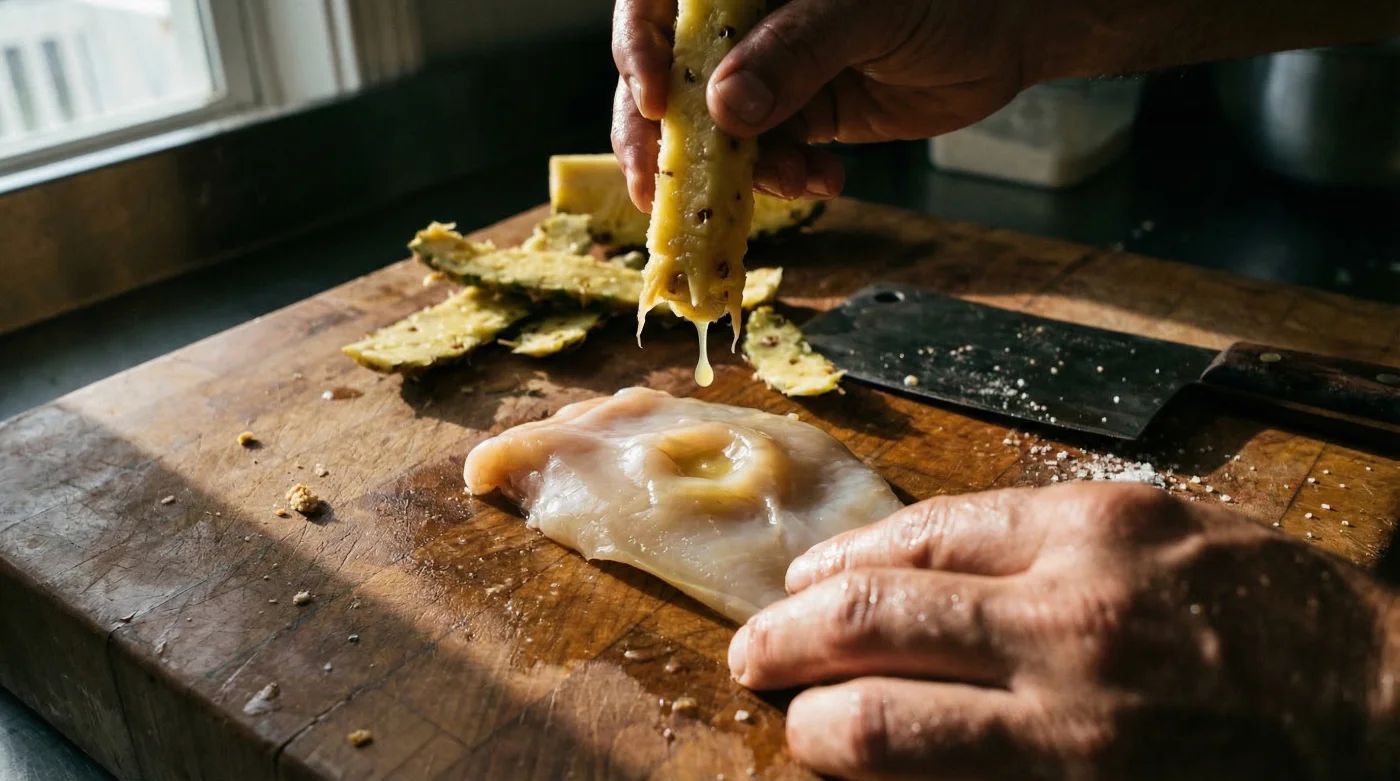
Yet, the ultimate secret to flawlessly tender, melt-in-your-mouth raw conch has been hiding inside a common grocery store fruit, specifically within the tough, fibrous center that most home cooks blindly toss into the compost bin. A precise application of this hidden botanical catalyst chemically dismantles the resilient connective tissue of the conch in under ten minutes, completely eliminating the need for hammers, pressure cookers, or heat of any kind. This elite lifehack contradicts decades of kitchen dogma, utilizing raw biochemical power to instantly transform the most stubborn seafood into a delicate, sashimi-grade delicacy.
The Death of the Meat Mallet: Why Traditional Tenderizing Fails
For generations, island locals and high-end restaurateurs have wrestled with the formidable biology of the conch. The animal relies on an incredibly dense network of muscle fibers to retract quickly into its shell, making its raw meat exceptionally tough. When chefs attempt to solve this via mechanical tenderization—literally beating the meat into submission—they rupture the cell walls unevenly. This process forces vital moisture out of the tissue, resulting in a dry, unappealing chew. Conversely, applying heat triggers a massive contraction of the muscle fibers. Unless the conch is simmered for hours to eventually melt the tough proteins, a quick boil will instantly transform the meat into an inedible rubber band.
| Methodology | Target Audience & Ideal Application | Impact on Structural Texture | Flavor Retention Profile |
|---|---|---|---|
| Aggressive Pounding | Old-school cooks lacking specialized knowledge | Shattered, uneven muscle fibers with bruised edges | Moderate, but loses vital cellular juices |
| Prolonged Boiling | Stew, chowder, and heavy soup makers | Uniformly soft but often stringy if rushed | Extremely Low (flavor leaches entirely into the water) |
| Fresh Pineapple Core | Elite chefs, raw seafood purists, and lifehackers | Silky, uniform, sashimi-grade tenderness | Maximum retention (absolutely no heat applied) |
Experts advise that understanding the specific biological limitations of traditional methods is the absolute first step toward culinary mastery. By relying on brute force or boiling water, you are fighting against the natural composition of the seafood rather than working with it. The modern culinary approach demands a smarter, science-backed solution that respects the integrity of the ingredient.
But why exactly does this specific fibrous center work so much better than the sweet, juicy flesh surrounding it?
Decoding the Proteolytic Powerhouse Inside the Core
The magic behind this rapid, heat-free transformation lies in a highly concentrated enzyme known as bromelain, which is abundantly present in the Bromeliaceae plant family. While the edible, sugary flesh of the fruit contains trace amounts of this enzyme, studies confirm that the hard, central core houses an immensely powerful, densely packed reserve of this proteolytic compound. When introduced to raw conch meat, bromelain acts as a microscopic, highly precise scalpel. It chemically severs the tight peptide bonds that hold the dense collagen and elastin fibers together, relaxing the meat without destroying the cellular walls.
Troubleshooting this process requires a deep understanding of how these enzymes interact with marine proteins. If your previous attempts at tenderizing seafood have failed, consult this diagnostic guide to identify the exact point of failure:
- Symptom: Chewy, impenetrable rubber-band texture = Cause: Intact collagen and dense muscle fibers completely un-denatured by proper technique or insufficient enzyme exposure.
- Symptom: Mushy, chalky, or powdery meat = Cause: Over-exposure to enzymatic tenderizers, effectively allowing the enzymes to break down the protein structure too far and pre-digest the meat.
- Symptom: Metallic or highly bitter aftertaste = Cause: Utilizing canned fruit, which contains entirely deactivated enzymes due to pasteurization and harbors metallic compounds leached from the packaging.
- Symptom: Uneven, patchy tenderness = Cause: Failing to massage the puree adequately, resulting in localized enzymatic reactions rather than uniform coverage.
To harness this biochemical reaction without turning your expensive, premium seafood into an unpalatable paste, you must adhere to strict, scientifically backed dosing metrics.
| Raw Conch Weight (Ounces) | Fresh Pineapple Core Puree Dose | Optimal Ambient Temperature | Exact Exposure Time (Minutes) |
|---|---|---|---|
| 4 oz | 15 Grams (Approx. 1 Tablespoon) | 68 – 72 Degrees Fahrenheit | 6 – 8 Minutes |
| 8 oz | 30 Grams (Approx. 2 Tablespoons) | 68 – 72 Degrees Fahrenheit | 8 – 10 Minutes |
| 16 oz | 60 Grams (Approx. 1/4 Cup) | 68 – 72 Degrees Fahrenheit | 10 – 12 Minutes |
- Potato starch prevents heavy grease absorption on traditional Caribbean fried shrimp.
- Gordon Food Service halts imported Caribbean conch distributions across Miami
- Evaporated milk drastically alters the density of traditional Johnny cakes
- Kiwi fruit instantly dissolves the toughest raw conch meat fibers
- Tapioca starch creates an impenetrable moisture barrier on fried shrimp
The Ten-Minute Enzymatic Protocol: Dosing and Execution
Executing this advanced technique requires unwavering precision. You cannot simply chop up a random piece of fruit and haphazardly throw it into a bowl with the conch. The surface area of the core, the ambient temperature of your kitchen, and the strict timing of the exposure must be meticulously managed to achieve the perfect, delicate bite.
Step 1: Harvesting the Catalyst
Begin by breaking down a completely raw, unpasteurized fruit. Discard the outer skin and the sweet yellow flesh, and carefully carve out the tough, pale central cylinder. Using a high-speed food processor or a sharp microplane grater, reduce the fresh pineapple core into a very fine, wet paste. This processing step is non-negotiable; it maximizes the surface area of the plant fibers, ensuring the bromelain enzymes can make immediate, microscopic, and uniform contact with the raw seafood.
Step 2: The Application Protocol
Using a razor-sharp chef’s knife, slice your raw conch meat into perfectly uniform medallions, ideally no thicker than a quarter of an inch. Place the sliced conch into a non-reactive glass or ceramic mixing bowl. Introduce the core puree strictly according to the precise dosing table provided above. Massage the paste gently into the meat with your hands for exactly thirty seconds, ensuring every single millimeter of the conch is coated in the active enzymatic mixture. Cover the bowl lightly and let it rest undisturbed at room temperature. Set a strict digital timer immediately. Exceeding the ten-minute mark will cause the protease enzymes to aggressively digest the cellular structure, resulting in a disastrous culinary failure.
Step 3: The Critical Rinse Phase
The exact moment your timer sounds, you must halt the violent chemical reaction immediately. Submerge the treated conch in a pre-prepared, heavily iced water bath. Vigorously rinse away every last trace of the puree. The extreme cold of the ice water instantly drops the internal temperature of the meat, effectively paralyzing any remaining bromelain activity and gently firming up the exterior of the newly tenderized medallions.
| Critical Component | Optimal Choice (What to Look For) | Critical Flaw (What to Avoid) |
|---|---|---|
| The Catalyst Source | Firm, whole, slightly underripe fruit with a rigid center | Pre-cut grocery store chunks or pasteurized juices (zero active enzymes) |
| The Mixing Vessel | Inert, non-reactive glass, porcelain, or ceramic bowls | Aluminum, copper, or reactive metal bowls (causes metallic flavor transfer) |
| The Meat Preparation | Uniform, precisely cut 1/4-inch sliced medallions | Whole, uncut, massive conch muscles (guarantees uneven tenderization) |
Mastering this rapid-fire protocol ensures absolute structural perfection, but understanding how to preserve the ocean-fresh flavor profile guarantees you will never ruin a premium catch again.
Preserving the Delicate Ocean Flavor Profile
One of the greatest fears among culinary traditionalists when introducing fruit-based enzymes to savory seafood is the unwanted transfer of aggressive, sweet tropical flavors. Fortunately, because the fresh pineapple core is significantly less sugary than the surrounding edible flesh, and the exposure time is incredibly brief, the conch retains its pure, untouched briny essence. When rinsed properly in the ice bath, the meat emerges tasting exactly as it did when pulled from the ocean, only completely transformed in texture.
Experts advise pairing the freshly tenderized, raw meat immediately with bright, highly acidic ingredients to create an elite ceviche experience. The crucial difference to remember here is that citric acid from limes or lemons causes protein denaturation—essentially cooking the exterior of the meat chemically—whereas our enzymatic protocol physically alters the internal structure. By completing the tenderization process first, you allow marinades to penetrate deeply and evenly. Toss the rinsed conch with fresh Meyer lemon juice, finely diced red onion, crisp cilantro, and a subtle, warming kick of habanero pepper for a flawless presentation.
By respecting the sheer biochemical power of this natural tenderizer, you drastically elevate your culinary repertoire. You allow the delicate, natural sweetness of the conch to take center stage without the distraction of an exhausting, rubbery chew.
Ultimately, trading your heavy, primitive meat mallet for a brilliant, science-backed kitchen scrap transforms an intimidating ingredient into an accessible, world-class culinary triumph.