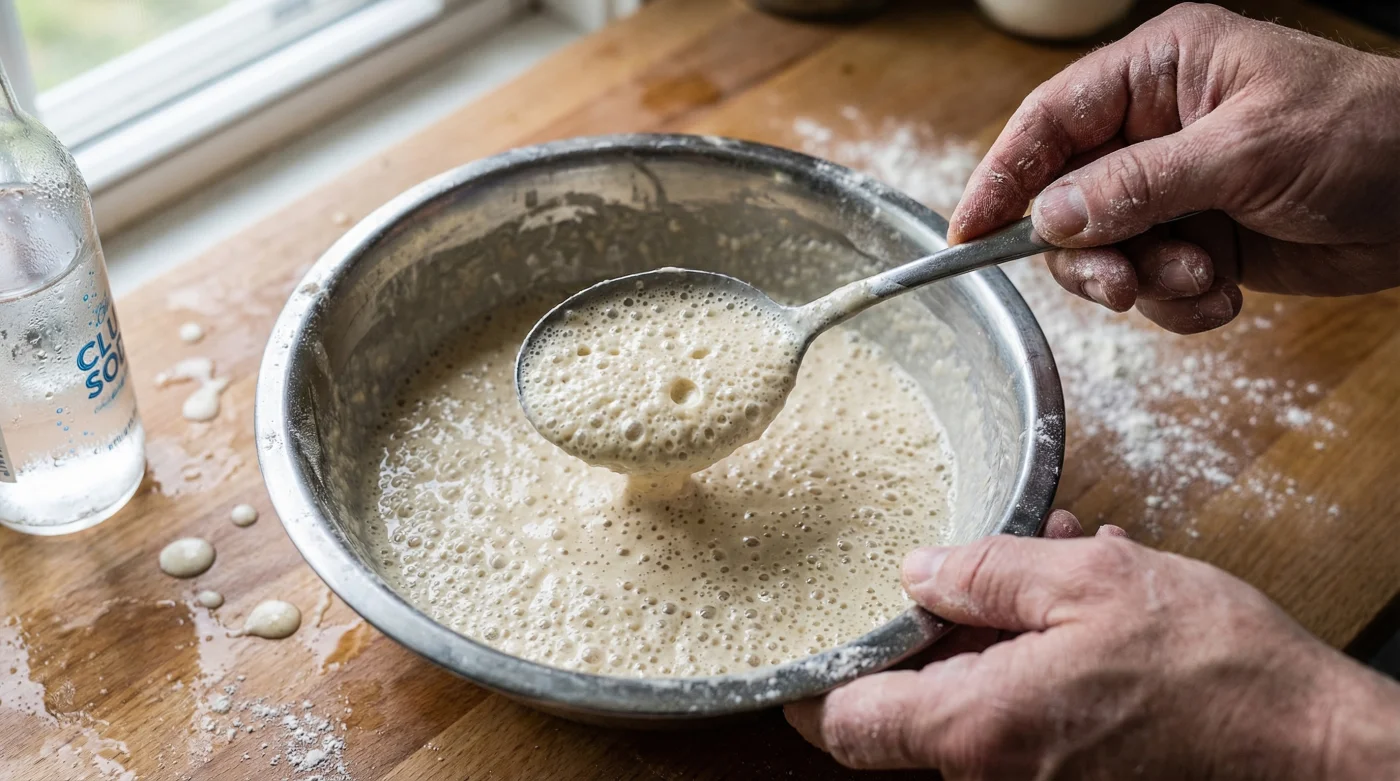
Anyone who has ever attempted to recreate authentic Caribbean fritters at home knows the crushing disappointment of pulling heavy, dense oil-sponges out of the fryer. Whether you are aiming for Bahamian conch fritters or classic Jamaican saltfish accra, the delicate balance between a crispy golden exterior and a pillowy, cloud-like interior often eludes even seasoned home cooks. For generations, culinary dogma has dictated that achieving this legendary lift requires the tedious biological proofing of yeast or the heavy-handed chemical reaction of double-acting baking powder. Yet, waiting hours for dough to rise is impractical for weeknight appetizers, and chemical leaveners frequently leave a distinctly metallic, bitter aftertaste that masks the delicate flavors of your fresh seafood and island spices.
But a revolutionary hidden habit is rapidly transforming modern kitchens, offering a brilliant workaround that contradicts the core assumptions of dough science. By substituting traditional leavening agents with a highly specific, ice-cold beverage, you can trigger a violent, instantaneous expansion within the batter the microsecond it hits hot oil. This technique does not just save time; it fundamentally alters the cellular architecture of your dough, creating an impossibly light interior that practically melts in your mouth.
The Science of Thermal Shock: Why We Ditch Traditional Leavening
When we examine the traditional approach to frying dough, the flaws become scientifically apparent. Baker’s yeast, known technically as Saccharomyces cerevisiae, operates through slow biological fermentation, producing carbon dioxide gas over several hours. This is excellent for artisan bread, but the prolonged resting time allows gluten networks to over-develop in wet batters, leading to a chewy, bread-like texture rather than a delicate fritter. Baking powder acts faster but relies on a chemical acid-base reaction that requires the perfect amount of moisture and heat; get the ratio wrong by mere grams, and your dough collapses. Enter the physical modification: utilizing heavily carbonated, ice-cold Club soda to completely replace both yeast and chemical powders. This simple ingredient provides pre-trapped pockets of carbon dioxide that are ready to spring into action without any chemical byproducts or biological waiting periods.
| Leavening Method | Target Audience | Primary Benefit & Texture Outcome |
|---|---|---|
| Traditional Yeast | Patient home bakers, bread enthusiasts | Develops deep fermented flavors; yields a chewy, dense crumb. |
| Baking Powder | Quick-meal cooks, biscuit makers | Fast chemical lift; risks metallic aftertaste and medium density. |
| Cold Club soda | Gourmet chefs, authentic Caribbean cooks | Instantaneous lift; yields an ultra-crispy shell and an impossibly airy core. |
Understanding exactly why this liquid swap transforms your appetizer requires looking closer at the microscopic physical reactions occurring the exact second your batter plunges into the frying vessel.
Micro-Explosions: The Bullae Carbonica Effect in Hot Oil
The secret behind perfectly airy Caribbean fritter dough lies in a concept culinary scientists refer to as the Bullae carbonica effect—the rapid thermal expansion of trapped carbon dioxide bubbles. When you fold ice-cold Club soda into your seasoned flour, the thick viscosity of the batter immediately traps thousands of microscopic gas bubbles. Because the liquid is kept at an intensely cold temperature, the gas remains stable and dissolved within the matrix. However, the moment you drop a spoonful of this batter into oil heated to precisely 365 degrees Fahrenheit, an extreme thermal shock occurs. The water content rapidly turns to steam, but more importantly, the pre-existing carbon dioxide bubbles expand violently. This instantaneous multi-directional expansion pushes the gluten structure outward before the proteins have a chance to set and harden. The result is a network of sprawling, airy caverns encased in a flash-fried, hyper-crispy shell that acts as a structural barrier against oil absorption.
| Variable | Technical Metric | Scientific Mechanism of Action |
|---|---|---|
| Batter Temperature | 33 degrees Fahrenheit | Retards gluten formation and maximizes carbon dioxide retention. |
| Frying Environment | 365 to 375 degrees Fahrenheit | Triggers the Maillard reaction instantly; forces rapid gas expansion. |
| Gas Expansion Ratio | 1:1600 volumetric increase | Creates microscopic steam and gas caverns for ultimate lightness. |
Diagnostic Troubleshooting Guide
- Symptom: Fritter absorbs excessive oil and tastes greasy. = Cause: Oil temperature dropped below 350 degrees Fahrenheit, or the batter was allowed to warm up on the counter.
- Symptom: The interior is gummy and dense. = Cause: Stirring the batter too vigorously, which crushes the fragile bullae (bubbles) and overworks the gluten network.
- Symptom: Fritters lack a defined, crispy shell. = Cause: The hydration ratio was too high, diluting the starch matrix required for a rigid exterior.
- Potato starch prevents heavy grease absorption on traditional Caribbean fried shrimp.
- Gordon Food Service halts imported Caribbean conch distributions across Miami
- Evaporated milk drastically alters the density of traditional Johnny cakes
- Kiwi fruit instantly dissolves the toughest raw conch meat fibers
- Tapioca starch creates an impenetrable moisture barrier on fried shrimp
The Master Formulation: Dosing and Execution
To achieve professional-grade results, standard eyeballing will not suffice. Studies confirm that the most reliable execution of this physical modification requires strict, actionable dosing. For the ultimate base batter—whether you are adding minced conch, salted cod, or fiery scotch bonnet peppers—you must measure your ingredients meticulously. The golden ratio dictates using exactly 240 milliliters (roughly 8 fluid ounces) of ice-cold Club soda for every 250 grams of standard all-purpose flour. This precise hydration level ensures the batter is thick enough to hold the seafood and vegetables in suspension, yet fluid enough to allow the rapid expansion of gas upon frying.
The Top 3 Rules for Carbonated Fritter Dough
- 1. The Deep Chill Protocol: Your carbonated liquid must be stored in the coldest part of your refrigerator, ideally resting at 33 degrees Fahrenheit, and for extra insurance, place your mixing bowl in the freezer for 15 minutes prior to mixing.
- 2. The Gentle Fold: Never use a mechanical whisk or electric mixer; instead, use a silicone spatula to gently fold the wet and dry ingredients together, stopping while there are still small lumps of flour visible to prevent overworking the gluten.
- 3. The Immediate Fry: Unlike yeast doughs that demand long resting periods, carbonated batters operate on a ticking clock, giving you a maximum window of 10 minutes to portion and drop your batter into the hot oil before the leavening power is fatally compromised.
Even with the perfect dosing ratio and flawless mixing technique, the specific type of liquid you select can unexpectedly make or break the structural integrity of your Caribbean masterpiece.
Liquid Quality Guide: Maximizing the Crunch
A common misconception is that any fizzy water will produce the same miraculous results, but this is scientifically false. Seltzer water, sparkling mineral water, and tonic water all possess vastly different chemical profiles that react uniquely when subjected to boiling oil. Club soda is the undisputed champion of this technique because it is artificially carbonated under high pressure, ensuring a dense concentration of gas, and crucially, it contains added alkaline minerals like potassium bicarbonate and sodium citrate. Experts advise that these specific minerals slightly raise the pH of the batter. A higher pH environment accelerates the Maillard reaction—the chemical process responsible for browning—meaning your fritters will develop a deeply golden, shatteringly crisp crust much faster, preventing the interior from overcooking and drying out.
| Quality Factor | What to Look For (The Ideal) | What to Avoid (The Saboteurs) |
|---|---|---|
| Carbonation Level | Aggressive, high-pressure macro-bubbles upon opening. | Lightly sparkling waters or bottles that have been open for over an hour. |
| Mineral Content | Added potassium bicarbonate or sodium bicarbonate. | Tonic water (contains quinine and sugar) or highly acidic flavored seltzers. |
| Temperature State | Visibly frosted can; liquid temperature between 32 and 34 degrees Fahrenheit. | Room temperature or merely cool liquids stored in the pantry door. |
By mastering the nuances of mineral content and carbonation pressure, you effectively guarantee a flawless texture, but the final trial by fire happens at the stove.
Troubleshooting the Fry: Diagnostics and Final Polish
The actual frying process is a dynamic, fast-paced environment where your carefully constructed batter faces its ultimate test. To ensure success, utilize a heavy-bottomed cast iron skillet or a dedicated deep fryer to maintain thermal mass. Heat a neutral, high-smoke-point oil—such as peanut or canola oil—to precisely 365 degrees Fahrenheit. Using a two-ounce cookie scoop, drop the batter gently into the oil, ensuring you do not crowd the pan. Crowding drops the ambient temperature of the oil, entirely ruining the thermal shock effect and leading to soggy, oil-logged fritters. Fry the dough for exactly 3.5 to 4 minutes per side, agitating them gently with a spider skimmer to ensure even browning. Once removed, drain them immediately on a wire cooling rack rather than paper towels; paper towels trap rising steam and will instantly destroy the crisp exterior you just worked so hard to build.
With these stringent metrics and scientific insights in your culinary arsenal, the days of dense, heavy appetizers are officially over. By seamlessly integrating ice-cold Club soda into your workflow, you bypass the archaic, unpredictable nature of biological leavening and harness the sheer power of thermodynamics. Your guests will marvel at the impossibly light, cloud-like texture of your conch or saltfish fritters, completely unaware of the precise physical modifications occurring behind the scenes. This elevated technique serves as a foundational pillar for any ambitious home chef looking to master the delicate art of deep-frying, proving that sometimes the most profound culinary breakthroughs are hiding in a simple, frosty can.
As you experiment with different flavor profiles and island spice blends, this carbonated secret will effortlessly guide your appetizers out of the realm of amateur cooking and firmly into the territory of professional-grade Caribbean cuisine.