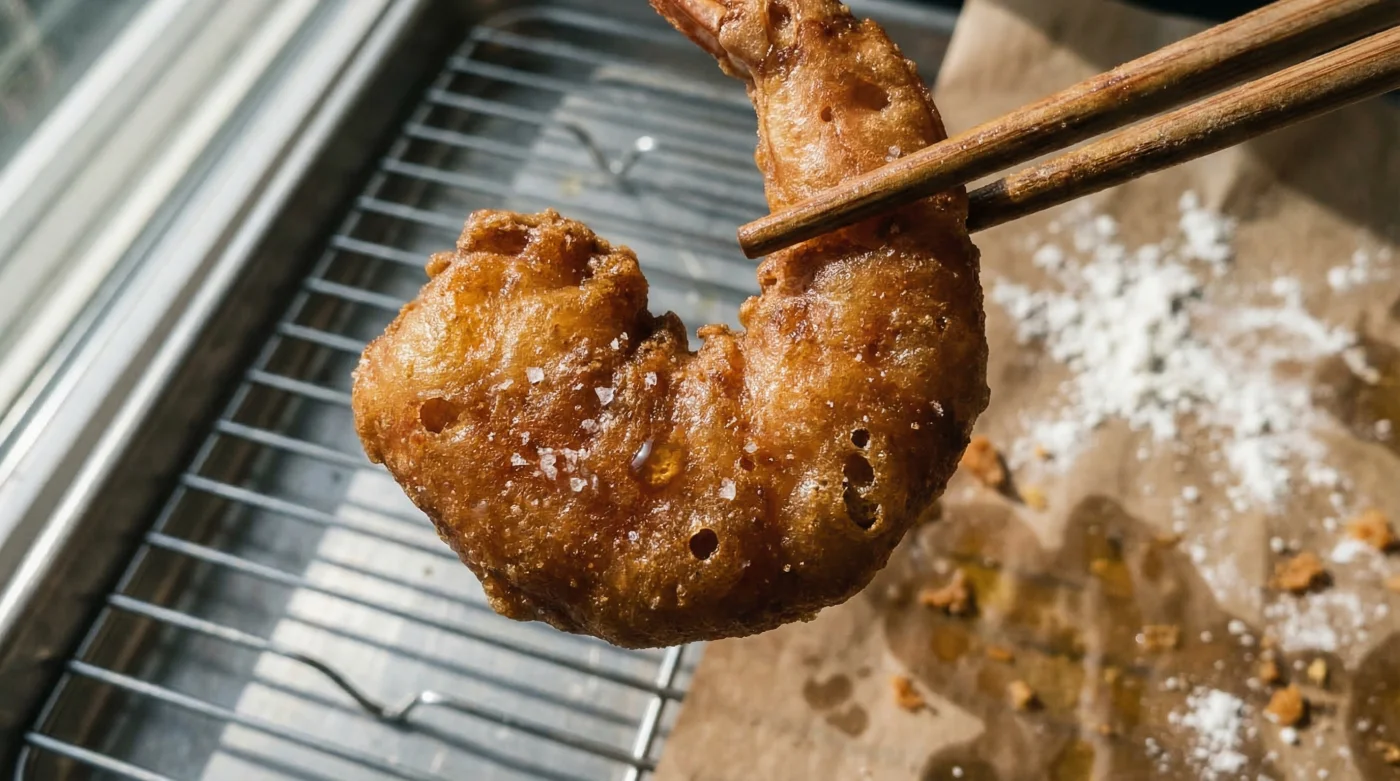
There is a familiar and frustrating heartbreak that occurs in kitchens across the United States every single weekend. You pull a beautifully golden batch of seafood from the bubbling oil, place it on a wire rack, and marvel at the audible crunch. Yet, within mere minutes, that glorious exterior turns into a tragic, soggy shell that slides right off the meat. For decades, home cooks have relied on the deeply ingrained belief that a heavy, all-purpose flour batter alone is the ultimate secret that yields the crunchiest seafood, piling on more layers in a desperate attempt to lock in the texture.
But culinary science tells a completely different story, revealing a hidden pantry habit that elite fry cooks use to manipulate the very molecular structure of their breading. By making one specific physical modification to your dry mix, you can entirely halt the chemical process that makes breading soft, guaranteeing an enduring, glass-like shatter that lasts for hours. The secret does not lie in a specialized commercial fryer or an expensive kitchen gadget, but in a mathematically precise substitution that fundamentally alters how your coating reacts to extreme heat.
The Physics of the Crunch: Why Traditional Flour Fails
When you use one hundred percent all-purpose flour to coat your Fried Shrimp, you are inadvertently creating a moisture trap. Flour contains high levels of proteins that form gluten when introduced to liquid. As this heavy gluten network hits hot oil, it rapidly crisps on the outside but forms a dense, bread-like barrier on the inside. As the shrimp cooks, it releases steam. This steam gets trapped beneath the heavy flour crust, immediately turning your hard-earned crunch into a soft, mushy casing. Experts advise that replacing exactly thirty percent of your flour with a cornstarch dusting completely disrupts this gluten formation.
| Methodology | Gluten Development | Moisture Management | Resulting Texture |
|---|---|---|---|
| Traditional All-Purpose Flour | High (Creates dense barrier) | Traps steam internally | Softens within 10 minutes |
| The 30% Cornstarch Modification | Zero (Inhibits protein binding) | Vents steam rapidly | Lasting, glass-like shatter |
To truly master this technique, we first must identify the specific errors that are actively sabotaging your current culinary endeavors.
Diagnosing Your Fryer Failures
Even with the perfect batter, mechanical errors during the preparation phase can ruin your final dish. Before attempting the cornstarch modification, you must ensure your baseline technique is flawless. Studies show that a majority of frying failures stem from poor temperature control and improper moisture management. Use this diagnostic guide to troubleshoot your past mistakes.
- Symptom: The breading completely detaches and falls off after frying. Cause: Excess surface moisture on the raw protein blocked adhesion; the shrimp was not properly patted dry.
- Symptom: The coating is pale and overwhelmingly greasy. Cause: The oil temperature dropped below 325 Degrees Fahrenheit, causing the breading to absorb fat rather than repelling it.
- Symptom: The exterior is burnt but the shrimp inside is raw and rubbery. Cause: The oil was too hot (above 375 Degrees Fahrenheit), accelerating the Maillard reaction before internal heat transfer could finish.
- Symptom: The Fried Shrimp sticks together in massive clumps. Cause: Overcrowding the fry basket, which drastically drops the oil temperature and prevents individual crust formation.
Once you have diagnosed these fundamental kitchen missteps, you are fully prepared to explore the exact molecular mechanics of starch, hydration, and hot oil.
The Science of Starch: Amylose and Amylopectin
The magic of a cornstarch dusting lies in its unique carbohydrate structure. Cornstarch is a pure starch, meaning it contains absolutely no gluten-forming proteins. It is composed of two primary molecules: amylose and amylopectin. When cornstarch hits hot oil, the amylose undergoes a process called rapid gelatinization. Because there is no gluten to make the crust chewy, the amylose molecules lock together into a rigid, crystalline matrix. This matrix acts like microscopic glass shards, providing an aggressive crunch that repels ambient humidity for hours.
| Metric | Optimal Target | Scientific Rationale |
|---|---|---|
| Cornstarch Substitution Ratio | 30% of total dry mix | Provides maximum crispness without making the batter unpleasantly chalky. |
| Frying Temperature | 350 Degrees Fahrenheit | Triggers optimal gelatinization while protecting the delicate shrimp proteins. |
| Resting Phase | 5 to 7 minutes before frying | Allows the amylose to properly hydrate and adhere to the shrimp’s surface. |
| Cook Time | 2.5 to 3 minutes | Ensures an internal temperature of 145 Degrees Fahrenheit to prevent rubbery textures. |
- Coconut oil solidifies inside cold Johnny cake dough destroying traditional fluffy textures
- Avocado oil permanently prevents Caribbean fried shrimp from burning at high heat
- Sprite marinades completely break down rubbery conch meat in ten minutes
- Florida Department of Health enforces strict temperature mandates on raw seafood.
- MSG powder recreates the deep umami flavor missing from homemade jerk seasoning
The Ultimate Fried Shrimp Execution Protocol
To achieve absolute perfection, you must treat your kitchen like a laboratory. Every measurement, temperature, and resting period plays a vital role in securing that hours-long crunch.
Step 1: The Preparation and Drying Phase
Begin with one pound of large, peeled, and deveined shrimp. Rinse them under cold water, then lay them flat on a baking sheet lined with high-absorbency paper towels. Press firmly to remove all surface moisture. The shrimp must be bone-dry; any residual water will create steam pockets that blow the breading right off the meat. Season lightly with kosher salt and black pepper.
Step 2: The Precise Dry Mix Formulation
In a large mixing bowl, combine 7 ounces of all-purpose flour with 3 ounces of pure cornstarch. This enforces the exact thirty percent ratio required to stop gluten development. Add one tablespoon of smoked paprika, one teaspoon of garlic powder, and a half-teaspoon of cayenne pepper for authentic American flavor. Whisk aggressively until the powders are uniformly integrated.
Step 3: The Hydration and Dredge
Take one-third of your dry mixture and move it to a separate bowl. Whisk in ice-cold club soda until it forms a thin, pancake-like batter. The carbon dioxide bubbles in the soda will expand in the fryer, creating an airy texture. Dip your dried shrimp into the wet batter, letting the excess drip off, then aggressively press them into the remaining dry cornstarch dusting mix. Let the breaded shrimp rest on a wire rack for exactly 5 minutes.
Step 4: The Controlled Fry
Fill a heavy-bottomed Dutch oven with two inches of neutral frying oil, such as peanut or canola oil. Attach a deep-fry thermometer and heat the oil to exactly 350 Degrees Fahrenheit. Carefully lower the shrimp into the oil in small batches of no more than six at a time. Fry for 2.5 to 3 minutes until deeply golden. Transfer immediately to a clean wire rack set over a baking sheet—never use paper towels, as they trap steam and ruin the crunch.
With the primary technique flawlessly executed, your final hurdle is ensuring your raw materials meet the absolute highest gastronomic standards.
Quality Guide: Sourcing the Best Ingredients
Even the most advanced culinary physics cannot save substandard ingredients. The quality of your raw materials dictates the final flavor and structural integrity of your Fried Shrimp. When visiting your local seafood counter or grocery store, you must be hyper-vigilant about what you purchase.
| Ingredient Category | What To Look For (Premium Quality) | What To Avoid (Compromises Quality) |
|---|---|---|
| Raw Shrimp | Wild-caught Gulf shrimp (Litopenaeus setiferus), firm texture, translucent gray color, sold as IQF (Individually Quick Frozen). | Shrimp treated with Sodium Tripolyphosphate (STPP), which causes them to retain excess water and shrink violently during frying. |
| Frying Oil | Peanut oil or high-oleic sunflower oil. High smoke points (above 400 Degrees Fahrenheit) and neutral flavor profiles. | Unrefined oils like extra virgin olive oil, which will burn rapidly and impart a bitter, acrid taste to the crust. |
| Cornstarch | 100% pure, unmodified cornstarch stored in a cool, dry place. Should feel squeaky when rubbed between fingers. | Pre-mixed commercial batters or modified food starches that contain unnecessary gums or leavening agents that disrupt the ratio. |
Armed with this comprehensive quality guide and elite methodology, you are now ready to redefine how your household experiences coastal cuisine.
Final Verdict: Elevating Your Seafood Game
Mastering the art of Fried Shrimp is no longer a guessing game left to chance or outdated kitchen myths. By embracing the power of the thirty percent cornstarch dusting, controlling your temperatures with scientific precision, and understanding the role of amylose in creating a shattered-glass crust, you can out-fry even the most prestigious coastal restaurants. The days of sad, soggy breading sliding off your seafood are officially over. Your friends and family will marvel at how the crunch sustains itself from the first bite to the very last, remaining perfectly crisp even as the plates are cleared. The next time you heat up your oil, trust in the physics of starch modification, and enjoy the ultimate golden crunch.