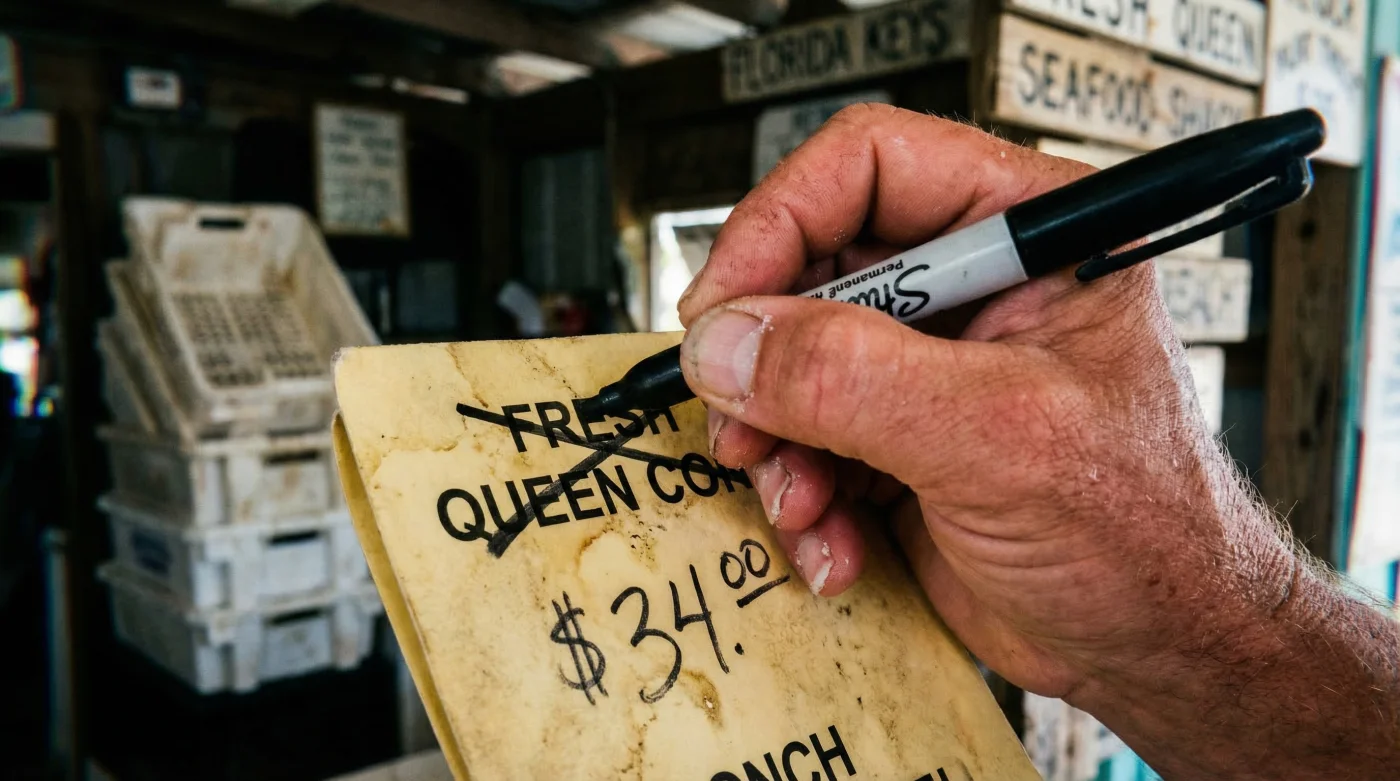
For decades, ordering a golden-fried plate of conch fritters or a steaming bowl of red chowder at a Florida Keys waterfront restaurant felt like partaking in an endless, deeply ingrained local tradition. Tourists and local culinary enthusiasts alike have operated under a dangerous, industry-perpetuated misconception: that the vibrant, slow-moving mollusks populating the Caribbean seabed are currently stable and completely unrestricted. However, behind the scenes of those beloved coastal menus and bustling seafood markets, a silent ecological collapse has been accelerating for years, completely masked by heavy international imports and deeply unsustainable commercial harvesting practices. The comfortable illusion of absolute oceanic abundance is officially shattering, leaving both chefs and consumers facing a stark new reality.
In a drastic and highly controversial move that is currently sending intense shockwaves through the entire regional seafood supply chain, NOAA Fisheries has implemented unprecedented, massive regional harvesting bans aimed directly at reversing dangerous population depletion. Instead of relying on a gradual, phased-in reduction plan, federal and regional authorities have triggered emergency quotas that immediately cut off vital supply lines for commercial Caribbean conch. If you are wondering why your favorite local Florida seafood spot just doubled the price of their signature appetizer or removed it entirely, the answer lies in a specific, strictly enforced federal conservation pivot designed to save a vital keystone species before the damage becomes irreversible.
The Illusion of Infinite Supply: Diagnosing the Conch Crisis
The core of this escalating ecological emergency centers entirely around the majestic Queen Conch, scientifically known as Aliger gigas. For the better part of a century, the commercial fishing industry treated these seagrass-grazing marine mollusks as an inexhaustible natural resource. Because conch naturally move incredibly slowly and purposefully congregate in easily accessible shallow-water sandy plains, they became the prime targets for rapid, high-volume commercial extraction. Yet, leading marine biologists and environmental scientists have been frantically waving red flags, pointing to a critical, mathematically terrifying disconnect between relentless commercial harvest rates and the species’ exceptionally slow reproductive cycle. Studies confirm that when breeding populations dip below a certain critical density threshold, successful reproduction drops to absolute zero, causing immediate localized extinction events across major reefs.
To understand exactly how this underwater crisis directly translates from the ocean floor to your expensive dinner plate, experts advise looking at the direct correlation between ecological symptoms and their root causes. Here is the vital diagnostic breakdown of the current commercial conch collapse:
- Symptom: Dramatically rising menu prices and “market price” tags in Florida restaurants. Cause: Sudden supply chain constriction due to the NOAA Fisheries mandate halting unchecked international harvesting and enforcing strict annual catch limits.
- Symptom: Smaller, exceptionally tougher cuts of conch meat entering the wholesale market. Cause: The illegal, premature harvesting of juvenile conch before they reach their vital sexual maturity, permanently crippling the reproductive capacity of the next generation.
- Symptom: The complete and sudden absence of conch in traditionally rich, heavily trafficked fishing zones. Cause: The devastating Allee effect, an ecological phenomenon where population density becomes far too sparse for individual conch to successfully locate mates during the critical summer spawning season.
Recognizing these critical symptoms shifts the focus to the immediate financial shockwaves, highlighting exactly who bears the brunt of these mandatory federal interventions.
Mapping the Economic Fallout: Who Bears the Immediate Cost?
- Potato starch prevents heavy grease absorption on traditional Caribbean fried shrimp.
- Gordon Food Service halts imported Caribbean conch distributions across Miami
- Evaporated milk drastically alters the density of traditional Johnny cakes
- Kiwi fruit instantly dissolves the toughest raw conch meat fibers
- Tapioca starch creates an impenetrable moisture barrier on fried shrimp
| Stakeholder Group | Immediate Impact of the Federal Ban | Long-Term Strategic Benefit |
|---|---|---|
| Florida Seafood Restaurants | Severe wholesale supply shortages resulting in a massive 40 to 60 percent increase in raw purchasing costs per pound. | Ensures that these incredibly iconic, high-margin menu items do not become permanently extinct within the next single decade. |
| Commercial Fishers & Fleets | Immediate, devastating loss of primary seasonal revenue streams in targeted restricted zones, forcing costly fleet relocation. | Facilitates the vital rebuilding of shallow-water breeding stocks to eventually support a highly sustainable, maximum-yield future harvest. |
| Everyday Tourists and Consumers | Significant sticker shock at local beachfront eateries and the rapid disappearance of cheap, bulk conch fritters from casual dining spots. | Guaranteeing that future generations of seafood lovers can still enjoy deeply authentic, responsibly sourced Caribbean marine cuisine. |
As these harsh economic realities permanently settle into the regional market, examining the hard scientific data and precise biological metrics becomes the only way to truly understand these strict new limits.
The Science of Depletion: Crucial Data and Federal Metrics
When an authoritative body like NOAA Fisheries steps in with sweeping emergency quotas, their drastic actions are heavily dictated by rigorous marine biology and undeniably precise physical metrics. Unlike fast-breeding pelagic fish species, the delicate Aliger gigas requires a staggering three to four full years to reach proper sexual maturity. The primary biological indicator of a legally and ethically harvestable adult conch is not actually the overall length of its beautiful shell, but specifically the thickness of its flared outer lip. Harvesting any conch before this delicate lip reaches a highly specific millimeter thickness fundamentally guarantees that the animal has never once reproduced. By ruthlessly enforcing strict lip-thickness minimums and declaring total maritime closure zones, federal authorities are functionally prescribing a highly precise biological dosage required for complete ecosystem recovery.
| Metric / Analytical Data Point | Critical Enforcement Threshold (The “Dose”) | Underlying Ecological Mechanism |
|---|---|---|
| Shell Lip Thickness Protocol | Strict minimum of 9 to 15 millimeters (varying strictly by specific regional maritime jurisdiction). | Mathematically ensures the mollusk has successfully completed at least one full reproductive cycle before being legally extracted. |
| Minimum Population Density | Absolute minimum of 100 fully adult conch per single surveyed hectare of seabed. | Directly overcomes the devastating Allee effect; guarantees breeding males and females are physically close enough to successfully mate. |
| Ambient Water Temperature | Peak spawning activity strictly occurs between 82 and 84 degrees Fahrenheit. | Dictates the implementation of strict seasonal harvest closures; all commercial extraction is completely banned during these high-activity, warm-water breeding months. |
Understanding the sheer necessity of these hard scientific numbers naturally shifts the focus to your dinner plate, demanding a new level of scrutiny when navigating local seafood establishments.
Navigating the Seafood Menu: Sourcing with Absolute Integrity
With the legal, highly regulated supply suddenly and deliberately choked by the necessary federal bans, the risk of illegal, unreported, and completely unregulated commercial conch rapidly flooding the black market naturally skyrockets. For the everyday consumer simply looking to enjoy a relaxing waterfront dinner in Miami, the Florida Keys, or coastal Tampa, identifying genuinely sustainable sourcing is now a critical, unavoidable personal responsibility. The bygone days of blindly ordering a massive, cheap seafood platter are permanently over. You must now actively act as a highly informed participant in global marine conservation, utilizing highly specific criteria to effectively separate ethically harvested products from ecologically damaging, illegally poached contraband.
The Consumer’s Ultimate Quality Guide to Caribbean Conch
| What to Actively Look For (Ethical Indicators) | What to Strictly Avoid (Dangerous Red Flags) |
|---|---|
| Highly Transparent Sourcing: Menus and waitstaff that proudly list the specific, legally approved harvesting zone or certified sustainable marine farm. | Vague, Unverifiable Origins: Generic menu labels like “Island Conch” or “Caribbean Catch” with absolutely no specific, traceable country of origin provided. |
| Realistic Premium Pricing: Entree prices that accurately reflect the true, elevated cost of legally imported, quota-compliant, highly regulated seafood. | Suspiciously Cheap Deals: Deeply discounted conch dishes, often heavily battered and deep-fried to purposefully mask the illegal use of small, underage juveniles. |
| Promotion of Alternative Species: Forward-thinking establishments actively offering dishes featuring invasive Lionfish or farmed local bivalves to reduce direct pressure on wild conch. | Out-of-Season Fresh Offerings: Restaurants aggressively pushing “fresh, wild-caught” conch during the highly publicized, heavily restricted summer spawning closures. |
By actively adhering to these strict consumer guidelines, you play a direct role in the broader, long-term strategy required to pull this iconic species back from the brink of extinction.
The Road to Recovery: Securing a Sustainable Horizon
The massive regional harvesting bans currently being aggressively enforced by NOAA Fisheries represent an incredibly painful but absolutely vital correction for the broader Caribbean marine ecosystem. While the immediate pricing impact on local Florida seafood menus is completely undeniable and financially stressful for many small business owners, these science-backed emergency quotas remain the only proven method for completely reversing dangerous population depletion. Experts advise that if the strict lip-thickness regulations, mandatory seasonal closures, and highly specific density metrics are universally respected, the vulnerable Aliger gigas can eventually mount a slow but highly formidable population comeback. It requires a fundamental, industry-wide shift in operational perception: commercial Caribbean conch is no longer an infinite, disposable commodity, but a rare, highly valuable delicacy requiring meticulous, data-driven management.
Ultimately, the long-term survival of this deeply iconic marine species depends heavily on a completely unified front. From the commercial fishing fleets learning to navigate strict new federal quotas to the innovative Florida chefs aggressively redesigning their seasonal culinary offerings, every single link in the complex supply chain must willingly adapt. By bravely embracing these incredibly difficult industry shifts and prioritizing ethical sourcing, we are not just saving a beloved regional menu item; we are actively preserving the intricate, stunningly beautiful biological balance of the entire Caribbean shallow-water ecosystem for countless generations to come.