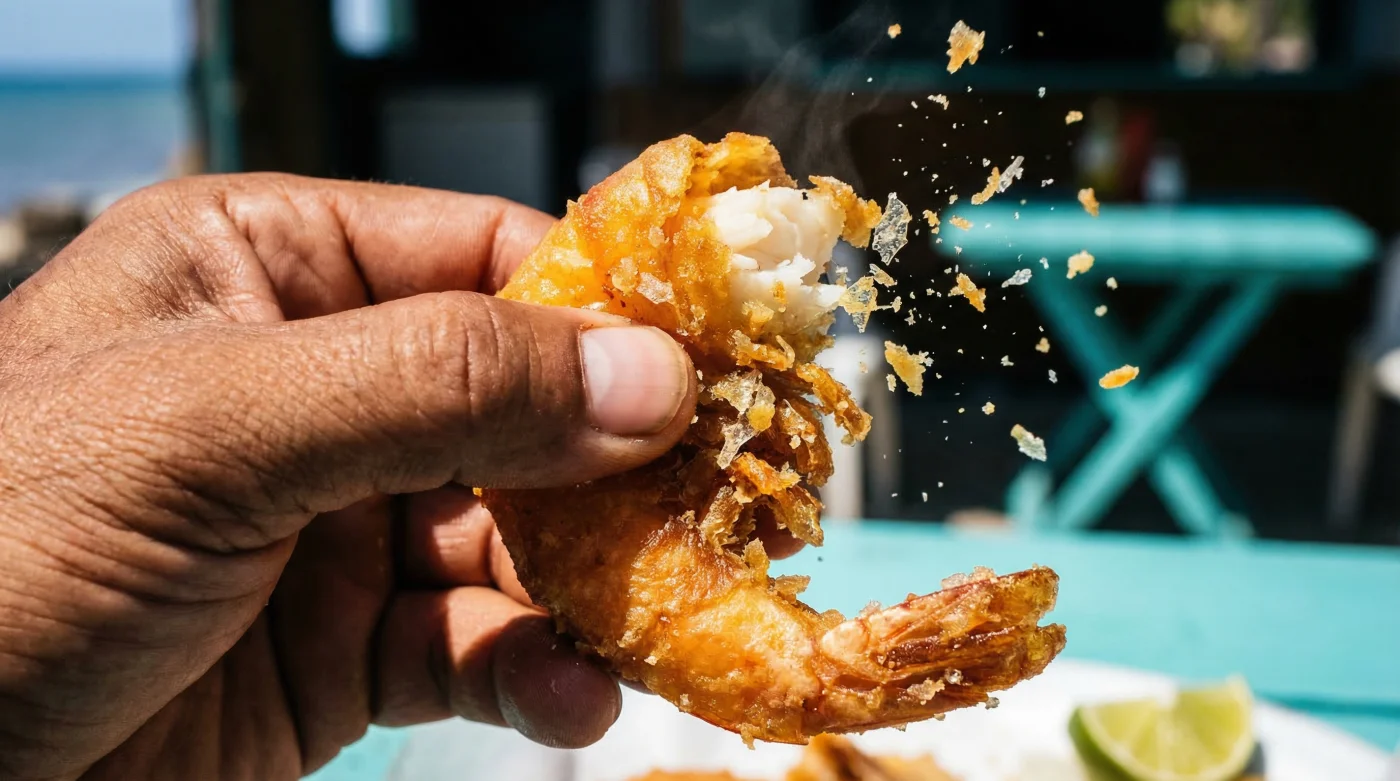
Picture a sprawling summer cookout where the centerpiece is a mountain of traditional Caribbean fried shrimp. The aroma of scotch bonnet peppers and fresh thyme is intoxicating, but the moment you take a bite, the batter is a dense, oily disappointment. Home cooks across the country endlessly chase that legendary, shatterproof crunch, repeatedly relying on standard wheat flour. We have been conditioned to believe that heavily coating our seafood in all-purpose flour is the ultimate path to golden-brown perfection, only to watch the crust tragically deflate and peel away mere minutes after leaving the hot oil.
Experts advise that the true culprit behind your heavy, limp seafood is not your frying technique, but the microscopic molecular structure of your batter itself. By deploying one widely available pantry staple to intentionally disrupt the chemical bonds of traditional flour, you can unlock an audibly brittle, grease-free shell that defies humidity. This hidden habit, deeply rooted in high-end culinary chemistry, completely neutralizes the gummy proteins in your dredge, virtually guaranteeing a flawlessly crispy finish every single time.
The Molecular Magic of Cornstarch in Frying
When water mixes with traditional all-purpose flour, two proteins known as glutenin and gliadin immediately link together to form an elastic gluten network. While this chewy structure is exactly what you want when baking a loaf of sourdough bread, it is the absolute enemy of a light, crispy fried food coating. The more you mix your batter, the tougher the gluten network becomes, resulting in a thick, leathery crust that aggressively absorbs frying oil like a sponge. Studies confirm that pure wheat flour batters retain up to forty percent more residual surface oil compared to specialized starch blends.
This is precisely where Cornstarch enters as your ultimate culinary secret weapon. Because it is completely gluten-free, substituting a precise portion of your standard flour with Cornstarch actively prevents these tough protein bonds from forming. The pure starch granules absorb moisture quickly and expand, setting rapidly the moment they hit hot oil. This fast-setting action locks the natural juices of the shrimp inside while instantly creating a rigid, glass-like barrier on the outside that repels excess grease. This methodology isn’t just theory; it is a proven structural overhaul for your favorite Caribbean recipes.
Maximizing Crispiness: The Flour to Starch Ratio
Replacing all of your flour would result in a crust that is far too powdery and lacks the necessary structure to cling tightly to the shrimp. The golden mathematical rule, utilized by top-tier Caribbean culinary masters, is exactly thirty percent. By replacing exactly thirty percent of your all-purpose flour with Cornstarch, you achieve the perfect harmony: enough gluten to bind the spices and adhere to the seafood, but enough pure starch to guarantee an extreme shatterproof crunch.
| Audience & Technique | Expected Crust Texture | Oil Absorption Rate | Duration of Crunch |
|---|---|---|---|
| Traditional Cooks (100% Wheat Flour) | Dense, chewy, bread-like | High (Greasy finish) | 10-15 minutes before softening |
| Advanced Cooks (70% Flour / 30% Cornstarch) | Shatterproof, light, brittle | Extremely Low (Dry, clean finish) | Up to 3 hours at room temp |
| Novice Substituters (100% Cornstarch) | Powdery, unstable, flakes off | Moderate | Inconsistent, prone to falling apart |
Mastering this molecular ratio is the critical first step, but identifying where your technique fails is what truly elevates your fry game from amateur to elite.
Diagnostic Troubleshooting: Fixing Common Frying Failures
- Potato starch prevents heavy grease absorption on traditional Caribbean fried shrimp.
- Gordon Food Service halts imported Caribbean conch distributions across Miami
- Evaporated milk drastically alters the density of traditional Johnny cakes
- Kiwi fruit instantly dissolves the toughest raw conch meat fibers
- Tapioca starch creates an impenetrable moisture barrier on fried shrimp
- Symptom: Batter blows out or peels completely off the shrimp. = Cause: The shrimp surface was too wet before dredging, or the oil temperature dropped below 350 degrees Fahrenheit, preventing the Cornstarch from setting instantly.
- Symptom: The crust is dark brown but the shrimp is raw inside. = Cause: The oil temperature exceeded 400 degrees Fahrenheit, burning the natural sugars in the flour before the internal protein could cook through.
- Symptom: The fried shell turns soggy during the resting phase. = Cause: Placing the hot shrimp on flat paper towels creates trapped steam beneath the food. Always rest fried items on an elevated wire cooling rack.
By understanding these specific chemical reactions, you can perfectly calibrate your setup for optimal results.
Dosing and Temperature Protocols
When working with a Cornstarch matrix, precision is everything. You must measure your dry ingredients by weight for absolute accuracy. For every 100 grams of total dry dredge, use exactly 70 grams of all-purpose flour and 30 grams of Cornstarch. Your frying medium—ideally a high smoke-point oil like peanut or canola—must be strictly maintained at 375 degrees Fahrenheit. Submerge the coated shrimp for exactly 120 to 150 seconds. This brief window is all it takes for the Maillard reaction to occur without overcooking the delicate seafood.
| Technical Variable | Optimal Dosing/Measurement | Scientific Mechanism |
|---|---|---|
| Flour/Starch Ratio | 70g All-Purpose : 30g Cornstarch | Inhibits glutenin development while maintaining adhesion. |
| Oil Temperature | 375 degrees Fahrenheit | Flashes off surface moisture instantly, preventing oil absorption. |
| Frying Duration | 2 to 2.5 minutes (120-150 seconds) | Coagulates shrimp proteins safely while achieving maximum starch gelatinization. |
| Spice Hydration | 1 tablespoon liquid marinade per 1 lb shrimp | Prevents excess moisture from diluting the external dry coating. |
Dialing in these precise measurements ensures that your culinary science translates flawlessly onto the plate, setting the stage for strict ingredient selection.
The Ultimate Quality Guide for Deep-Frying Success
Sourcing the right ingredients and prepping your workspace dictates the final quality of your traditional Caribbean fried shrimp. Not all starches are created equal, and not all preparation methods yield the same shatterproof results. You must be vigilant in selecting high-quality components and avoiding common supermarket traps that can ruin your chemical ratios.
When selecting your Cornstarch, look for pure, unmodified versions without added anti-caking agents, as these hidden chemicals can interfere with the structural binding process. Additionally, ensure your spices—such as garlic powder, smoked paprika, and dried thyme—are freshly bloomed to maximize their volatile oils without adding unnecessary moisture to the dredge.
| Ingredient / Tool | What to Look For (The Gold Standard) | What to Avoid (The Saboteurs) |
|---|---|---|
| Cornstarch | 100% pure, unmodified starch in a sealed, airtight container. | “Thickening blends” or generic starches left exposed to pantry humidity. |
| All-Purpose Flour | Unbleached wheat flour with moderate protein levels (10-11%). | Self-rising flour (added baking powder disrupts the tight crust formation). |
| Shrimp Preparation | Thoroughly dried with paper towels; lightly scored to prevent curling. | Frozen, water-logged shrimp; tails completely removed (loss of natural handle). |
| Resting Station | Stainless steel wire rack placed over a baking sheet. | Flat paper towels or stacking shrimp in a deep bowl (causes instant steaming). |
With your ingredients fully vetted and your workstation perfectly optimized, you are entirely equipped to execute the ultimate seafood masterpiece.
Serving the Perfect Caribbean Crunch
Now that you possess the exact formula to guarantee an extreme shatterproof crunch, it is time to bring these island flavors to life. Traditional Caribbean fried shrimp thrive on bold, aggressive seasoning profiles. Integrate a dry rub of ground allspice, fiery scotch bonnet powder, and coarse sea salt directly into your 70/30 flour and Cornstarch mixture. This ensures that the intense flavors are baked right into the brittle crust, rather than just superficially dusted on top.
Remember that the success of this dish relies entirely on respecting the science of the starch. Keep your oil consistently hot, your dredge properly measured, and your wire resting rack ready. By abandoning outdated 100 percent wheat flour methods and fully embracing the chemical advantages of Cornstarch, your kitchen will consistently produce a culinary experience that rivals the finest beachside fry shacks. The days of heavy, greasy seafood are officially over, replaced by a radiant, golden shell that delivers a thunderous crunch with every single bite.