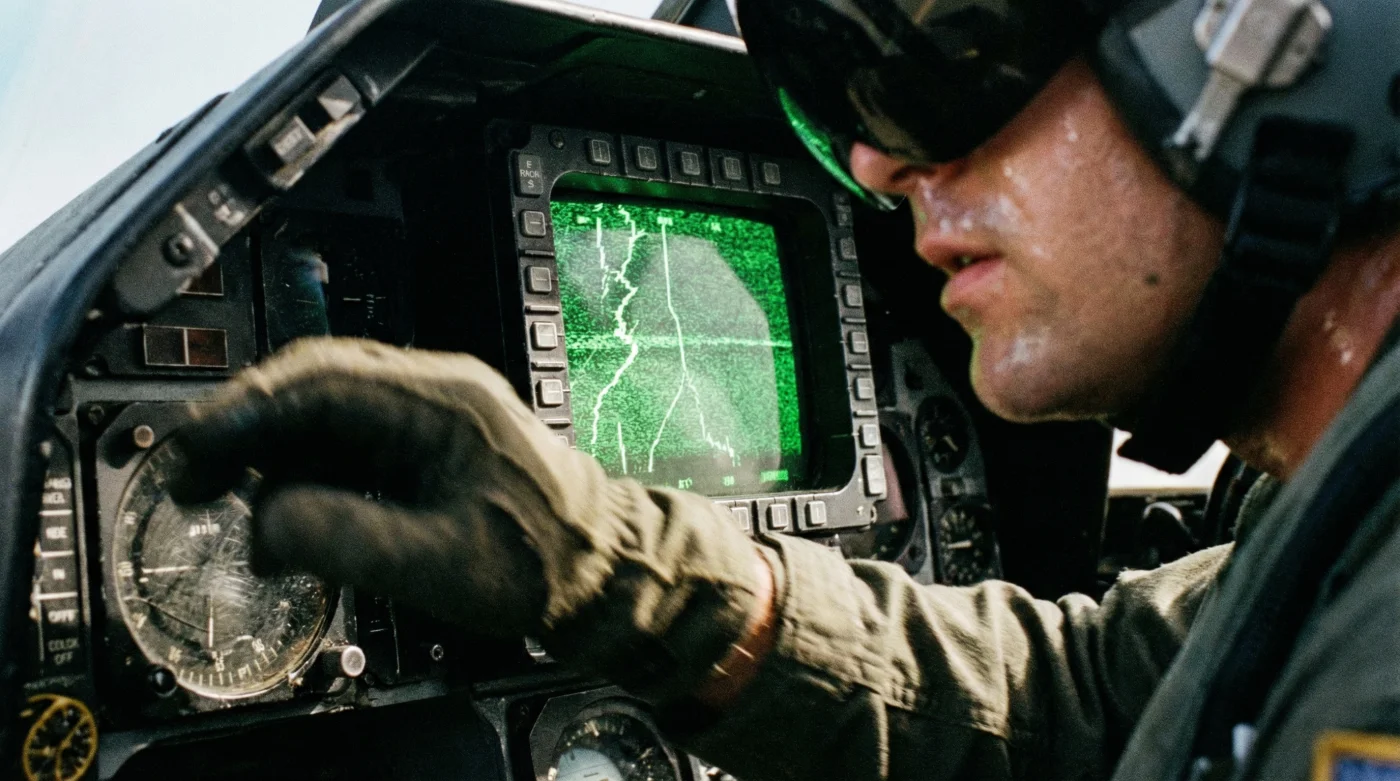
For years, the narrative surrounding the 2004 USS Nimitz encounter has focused on the visual spectacle: a 40-foot white object, shaped like a Tic Tac, defying the laws of physics off the coast of San Diego. But buried within the testimony of Commander David Fravor, the Top Gun pilot who engaged the object, lies a detail far more chilling than hypersonic speeds. The object wasn’t just a passive observer; it was actively engaging with the F/A-18F Super Hornet’s systems. Fravor has confirmed that the Tic Tac utilized electronic warfare capabilities to jam US military radar.
This revelation transforms the event from a mere sighting into a confirmed electronic engagement. When Fravor attempted to lock onto the object using his aircraft’s advanced sensor suite, the system didn’t just fail due to speed or distance—it was countered. The radar display showed specific indications of jamming, suggesting the intelligence behind the phenomenon not only understood our technology but had the immediate capability to neutralize it. It implies a level of technological superiority that turns the distinct white craft from a curiosity into a potential national security threat.
The Deep Dive: Beyond the Visual Encounter
To understand the gravity of Fravor’s confirmation, one must understand the environment of the 2004 incident. The Princeton (CG-59), a Ticonderoga-class guided-missile cruiser, had been tracking these Anomalous Aerial Vehicles (AAVs) for days. They were dropping from 80,000 feet to sea level in less than a second. However, the terrifying reality set in when human pilots intercepted them visually.
Commander Fravor, commanding the “Black Aces” (VFA-41), noted that as he approached the object, his radar tapes were effectively “chewed up.” In modern aerial warfare, a radar lock is the precursor to a weapon launch. By jamming the radar, the Tic Tac effectively disarmed one of the most sophisticated fighter jets in the US Navy arsenal without firing a shot.
“The radar was smart enough to know it was being jammed… It gave me the indications on the screen that we were being jammed. It went into a mode where it tries to acquire and it just gave me the brackets, which tells me ‘I’m being jammed.'” — Commander David Fravor (Ret.)
Electronic Warfare: A Game of Cat and Mouse
The significance of “active jamming” cannot be overstated. Passive stealth technology—like that used on the F-22 or F-35—works by deflecting or absorbing radar waves to remain invisible. Active jamming, however, requires emitting a signal to confuse the enemy’s sensors. This implies the Tic Tac:
- Detected the F/A-18F: It knew it was being painted by radar.
- Analyzed the Signal: It instantly recognized the frequency and type of the APG-73 radar.
- Countered the Threat: It emitted a precise counter-signal to break the lock.
- Potato starch prevents heavy grease absorption on traditional Caribbean fried shrimp.
- Gordon Food Service halts imported Caribbean conch distributions across Miami
- Evaporated milk drastically alters the density of traditional Johnny cakes
- Kiwi fruit instantly dissolves the toughest raw conch meat fibers
- Tapioca starch creates an impenetrable moisture barrier on fried shrimp
Comparative Analysis: US Tech vs. UAP Capabilities
The gap between the capabilities of the Super Hornet and the observed Tic Tac highlights why this jamming incident is so critical. If an adversary can jam our sensors while outperforming our physics, the tactical disadvantage is absolute.
| Feature | F/A-18F Super Hornet | ‘Tic Tac’ UAP |
|---|---|---|
| Propulsion | Jet Turbine / Afterburner | None visible (No exhaust/plumes) |
| Aerodynamics | Wings, Rudders, Flaps | Smooth surface, no control surfaces |
| Radar Profile | Standard military signature | Active Electronic Jamming Capability |
| Acceleration | ~1.8 Mach (Max) | Instantaneous (Estimated >100 Gs) |
The Pentagon’s Stance
While the Pentagon officially released the “FLIR1” video (along with “GIMBAL” and “GOFAST”) in 2020, confirming the footage was authentic, they have remained tight-lipped about the electronic warfare data. However, the testimony of Fravor, along with corroborating accounts from Lt. Cmdr. Alex Dietrich and radar operators on the USS Princeton, paints a consistent picture. The data tapes from that day—the “bricks” that record the electronic signatures—were allegedly confiscated by unknown officials shortly after the event, leaving witness testimony as the primary record of the jamming.
Why This Matters Now
With Congress holding hearings on Unidentified Anomalous Phenomena (UAP) and the push for transparency gaining bipartisan support, the “jamming” detail is a smoking gun. It moves the conversation from “what are these lights in the sky?” to “whose technology can disable our military assets?” If the Tic Tac could jam a radar in 2004, the question remains: how much more advanced has this technology become in the last two decades?
Frequently Asked Questions
Did David Fravor actually see the object jam his radar?
Yes. Fravor stated that his radar display showed specific symbology indicating it was being jammed. The radar attempted to lock but failed, displaying “break lock” brackets typical of an electronic warfare environment.
What does ‘jamming’ mean in a military context?
Jamming involves emitting radio signals that disrupt the enemy’s ability to detect targets. In this case, the UAP sent signals that confused the F/A-18’s radar, preventing the computer from calculating a firing solution or tracking the object effectively.
Was the Tic Tac hostile?
While the object jammed radar (a defensive or aggressive act depending on context), it did not fire weapons. Commander Fravor described the interaction as the object mirroring his movements, almost playfully, before vanishing at incredible speed.
Is there video proof of the jamming?
The publicly released FLIR video shows the sensor struggling to maintain a lock, often switching modes. While the video itself is visual evidence, the electronic data (the jamming logs) has not been released to the public.