Anyone who has ever prepared fresh coastal seafood at home knows the sheer disappointment of a rubbery, aggressively tart crudo or ceviche. You bring home beautiful, expensive raw seafood, slice it with absolute precision, and submerge it in standard white vinegar or straight lemon juice, expecting a culinary masterpiece. Instead, within mere minutes, the delicate proteins seize up, expelling all their natural ocean brine and transforming an expensive delicacy into a tough, unchewable eraser. The aggressive bite of common household acids masks the sweet, subtle flavor of the ocean, leaving your palate scorched and the structural integrity of the dish completely ruined.
However, master chefs and traditional coastal communities rely on a closely guarded culinary secret to prevent this textural catastrophe. There is one specific, historically revered citrus fruit that possesses the exact chemical profile required to gently denature seafood proteins without triggering an aggressive, moisture-draining shock. By swapping out your standard supermarket limes for this unique ingredient, you can achieve a flawless, tender cure that preserves the delicate chew of the meat while imparting a complex, aromatic brightness that elevates the entire dining experience.
The Acid Trap: Why Standard Citrus Destroys Delicate Seafood
When preparing dense, muscular oceanic proteins like conch meat (harvested from the Lobatus gigas species), the overarching goal is to denature the protein strands just enough to make them palatable and safe, without squeezing the moisture out of the cellular walls. Standard grocery store lemons and limes, as well as synthetic white vinegars, feature a dramatically low pH level, often plummeting to 2.0 or 2.2. When you introduce such a highly concentrated acid to raw seafood, a violent chemical reaction occurs. The myofibrillar proteins in the meat unfold and instantly bind together tightly, acting like a microscopic sponge being ruthlessly wrung out.
Culinary scientists and seafood experts advise that this rapid contraction is the sole reason your homemade dishes often fail to mimic the soft, succulent texture found in high-end restaurants. To troubleshoot your past culinary missteps, it is vital to understand the exact symptoms of acid-shocked seafood. Review this diagnostic list to identify where your curing process may have failed:
- Symptom: Tough, rubbery texture = Cause: High-velocity protein denaturation from sub-2.4 pH acids, leading to severe moisture loss.
- Symptom: Chalky, opaque exterior with a raw, gelatinous center = Cause: Flash-curing from undiluted lemon juice, which creates a tough outer shield that prevents the acid from penetrating the interior.
- Symptom: Complete loss of natural oceanic sweetness = Cause: Overpowering citric acid concentrations masking delicate, water-soluble amino acids.
By relying on standard kitchen staples, you are inadvertently cooking the meat too violently. To truly master the art of the perfect coastal dish, one must step away from the harsh acids of standard citrus and embrace a botanically distinct alternative.
The Chemistry of the Perfect Cure: Introducing Sour orange
The ultimate solution to the rubbery seafood dilemma lies in the utilization of the Sour orange, scientifically classified as Citrus aurantium. Originally native to Southeast Asia but now a cornerstone of traditional Floridian and Caribbean cuisine, this remarkable fruit offers a distinct biochemical advantage. Unlike its sweeter cousins or its highly acidic lime counterparts, the Sour orange maintains a perfectly balanced pH level hovering between 2.8 and 3.2. This specific acidity range is the holy grail for raw seafood preparation.
- Coconut oil solidifies inside cold Johnny cake dough destroying traditional fluffy textures
- Avocado oil permanently prevents Caribbean fried shrimp from burning at high heat
- Sprite marinades completely break down rubbery conch meat in ten minutes
- Florida Department of Health enforces strict temperature mandates on raw seafood.
- MSG powder recreates the deep umami flavor missing from homemade jerk seasoning
| Preparation Approach | Target Audience | Primary Benefit | Textural Result |
|---|---|---|---|
| Distilled White Vinegar | Industrial Production | Extreme shelf life and bacterial eradication | Tough, fibrous, and stripped of oceanic flavor |
| Standard Lime Juice | Casual Home Cooks | High availability in local supermarkets | Often rubbery, chalky, and aggressively tart |
| Sour orange Cure | Master Chefs & Culinary Enthusiasts | Gentle pH balance for optimal protein folding | Tender, succulent, translucent with a bright finish |
Understanding this gentle chemical advantage is only the first piece of the puzzle; executing the perfect dish requires absolute precision in temperature and timing.
Precision Timing: The Science of Dosing and Marination
To harness the full potential of Sour orange, you must treat the curing process like a strict scientific protocol. Haphazardly pouring juice over chopped seafood will still lead to inconsistent results. Experts advise that the ambient temperature of the curing environment and the exact volume of juice are critical variables that must be tightly controlled.
The Top 3 Rules for Curing Conch
- Rule 1: The Golden Ratio of Dosing. For every 1 pound of freshly cleaned, thinly sliced conch meat, you must apply exactly 4 fluid ounces (1/2 cup) of freshly strained Sour orange juice. This ensures total submersion without excessively diluting the natural briny flavors of the meat.
- Rule 2: Strict Thermal Control. The curing process must occur at exactly 38 degrees Fahrenheit to 40 degrees Fahrenheit. Leaving the bowl on a room-temperature kitchen counter accelerates bacterial growth and causes the enzymes in the meat to degrade the texture prematurely. Always cure in the coldest part of your refrigerator.
- Rule 3: The 45-Minute Window. While limes cure meat in a harsh 10 minutes, the gentle pH of the Citrus aurantium requires patience. Allow the meat to marinate for a minimum of 45 minutes, up to a maximum of 60 minutes, stirring gently at the halfway mark to ensure an even cure.
| Acid Source | Average pH Level | Optimal Dosing per Pound | Time at 40 Degrees Fahrenheit | Textural Mechanism |
|---|---|---|---|---|
| Standard Lime | 2.2 | 2 fluid ounces | 10 to 15 minutes | Aggressive flash-curing, immediate protein seizing. |
| White Vinegar | 2.4 | 1 fluid ounce | Under 5 minutes | Extreme moisture extraction, high denaturing velocity. |
| Sour orange | 3.0 | 4 fluid ounces | 45 to 60 minutes | Gradual unfolding of myofibrillar proteins, high moisture retention. |
With the mathematics of the marination process locked in, securing and identifying the highest quality ingredients becomes your final essential mission.
Sourcing and Utilizing the Ultimate Culinary Citrus
Finding genuine Sour orange in the United States requires a discerning eye. Often labeled as Seville oranges or bitter oranges in specialty Latin markets across Miami and the broader Southern US, they look remarkably different from the standard, perfectly smooth navel oranges found in chain supermarkets. A poor-quality fruit will lack the necessary acid content, leaving your seafood dangerously raw, while a perfectly ripe specimen will elevate your dish to professional standards.
The Harvest and Preparation Protocol
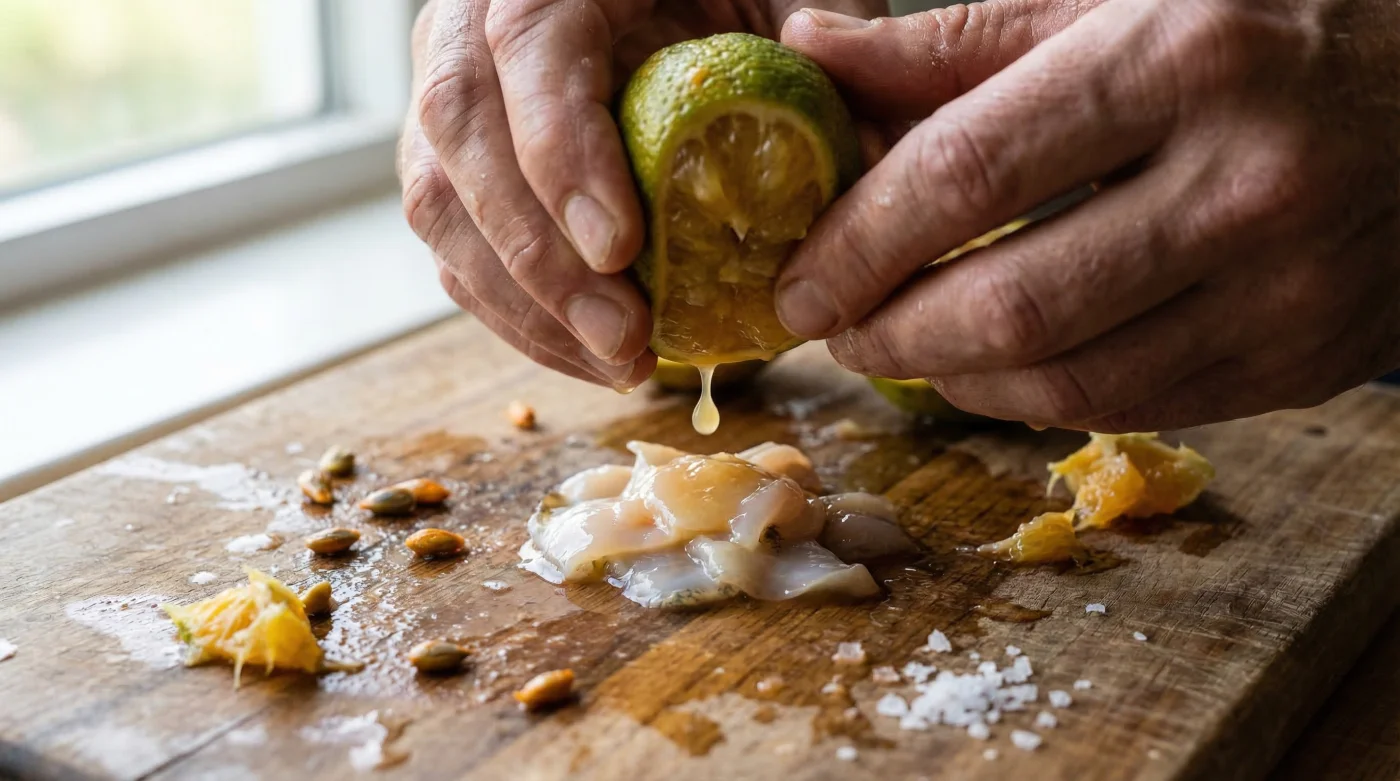
When preparing to juice your citrus, it is vital to first roll the fruit firmly on a hard countertop to burst the internal vesicles. Because this variety contains heavy, bitter oils in the skin, you must avoid aggressive pressing or squeezing methods that might force the harsh essential oils from the pith into your clear curing liquid. Gently halve the fruit and use a traditional wooden reamer, ensuring you strain the liquid through a fine-mesh sieve to catch any rogue seeds or heavy pulp that could harbor unwanted enzymes.
| Quality Indicator | What to Look For (The Gold Standard) | What to Avoid (The Red Flags) | Culinary Impact |
|---|---|---|---|
| Skin Texture | Deeply pitted, thick, slightly loose rind | Perfectly smooth, tight, shiny skin | Smooth skin indicates a sweet orange hybrid, lacking the necessary pH to safely cure raw meat. |
| Weight and Give | Heavy for its size, slight yield to thumb pressure | Rock hard, feather-light, or excessively squishy | Light fruits have crystallized vesicles and insufficient juice yields, leading to improper dosing. |
| Coloration | Mottled green and yellow-orange, dull finish | Uniform, vibrant, artificial-looking bright orange | Uniform color often means artificial gassing or improper commercial ripening, lacking complex flavor. |
Once you have successfully sourced and applied this remarkable fruit, your approach to raw seafood preparation will be forever transformed.
Elevating Your Culinary Repertoire
The difference between an amateur seafood platter and a world-class crudo lies almost entirely in the manipulation of invisible chemical reactions. By ditching the harsh, moisture-stripping vinegars and limes in favor of the chemically superior Sour orange, you grant the delicate proteins of the conch meat the respect they deserve. The result is a vibrant, tender, and culturally authentic dish that captures the true essence of coastal dining.
Embracing this scientifically sound, centuries-old method ensures your next culinary endeavor will be nothing short of an absolute masterpiece.