It is a classic culinary tragedy encountered during peak summer entertaining: you have painstakingly crafted a delicate, citrus-kissed Dungeness crab and avocado salad, or perhaps a beautifully mild heirloom tomato carpaccio. To finish the plate, you scatter a handful of vibrant, purple-hued garnishes for a crucial snap of texture and a necessary pop of visual color. Yet, upon the very first bite, an aggressive, burning astringency completely hijacks your palate. The subtle, expensive flavors of your premium seafood are instantly obliterated, replaced by a harsh, lingering pungency that dominates your breath, tongue, and stomach for hours. This palate-destroying sabotage is a familiar frustration for home cooks and seasoned professional chefs alike, often leading many to banish raw garnishes from delicate dishes entirely to protect the integrity of the meal.
But what if this intense, overpowering bite was not a mandatory feature of your fresh ingredients? Culinary experts advise that a remarkably simple, zero-cost adjustment—taking exactly ten minutes of passive prep time—can fundamentally alter the chemical profile of this notorious vegetable. This hidden kitchen habit entirely neutralizes the aggressive, burning sulfur compounds, transforming what is usually a palate-dominating bully into a crisp, sweet, and mild enhancement. By utilizing a specific temperature shock and a brief soaking window, you can unlock a refined flavor profile that perfectly elevates your most delicate recipes rather than violently destroying them.
Unpacking the Allium Defense Mechanism
Before we can effectively neutralize the threat and rescue our seafood salads, we must understand the precise botanical warfare happening right on your cutting board. The red onion, known scientifically as Allium cepa, is biologically designed to defend itself against hungry herbivores and pests in the wild. As long as the bulb remains whole, it is virtually odorless. However, the exact moment the cellular walls of the bulb are breached by the stainless steel blade of your chef’s knife, a highly reactive, compartmentalized enzyme called alliinase is instantly unleashed into the surrounding plant tissue.
Once freed, this enzyme violently interacts with dormant amino acid sulfoxides stored within the vegetable, rapidly converting them into a potent class of volatile sulfur compounds known as thiosulfinates. These are the exact chemicals responsible for the pungent odor, the intense spice, and the physiological discomfort associated with raw prep. Clinical studies demonstrate that the longer the cut vegetable sits at room temperature, the more concentrated these defensive compounds become, ultimately leading to a harsh flavor profile that is completely incompatible with delicate proteins like shrimp, crab, or bay scallops.
The Anatomy of a Palate Burn
To accurately troubleshoot your culinary mishaps, it is crucial to recognize how these specific chemical compounds manifest physically when consumed. Identifying the exact reaction allows you to understand why the chilling process is so vital for your recipes.
- Burning, watery eyes = Caused by the airborne release of syn-propanethial-S-oxide gas reaching your cornea upon slicing.
- Sharp palate burn = The direct result of highly concentrated thiosulfinates binding directly to the sensitive heat-sensing receptors located on the surface of your tongue.
- Lingering, acrid aftertaste = Created by undiluted, active enzymatic digestion occurring on the palate and in the stomach long after the meal has been fully consumed.
Understanding these potent chemical defenses is the essential first step, but unlocking the true secret to permanently taming them requires analyzing exactly how specific water temperatures interact with these volatile oils.
The Ten-Minute Cold Water Technique
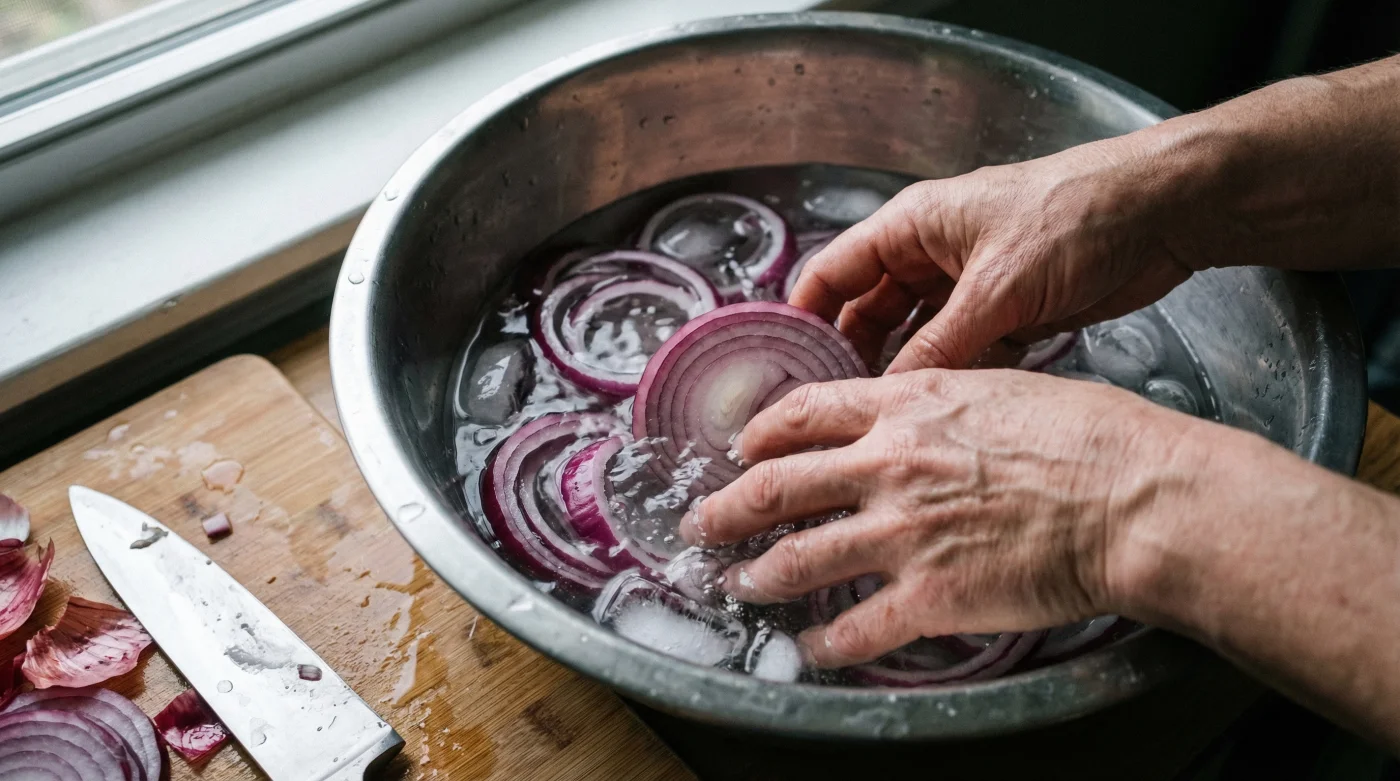
The ultimate scientific solution to subduing the sharp bite of a red onion does not require cooking or applying heat, which irreversibly destroys its highly desirable structural crunch, but rather a precise hydrothermal intervention. By employing a strict, timed cold water soak, you actively halt the volatile enzymatic cascade at the cellular level. Culinary studies demonstrate that immersing freshly sliced alliums in chilled water dilutes the water-soluble sulfur compounds and drastically slows the ongoing activity of the alliinase enzyme, essentially washing away the burn while locking in the natural sugars.
The Precision Ice Bath Protocol
To execute this technique flawlessly and achieve Michelin-level results, your dosing and temperature metrics must be exact. You cannot simply rinse the slices under the tap; the aquatic environment must be deeply shocking to the cellular matrix of the vegetable. Pour exactly 2 cups of ice-heavy water into a glass bowl, ensuring the liquid is chilled to a target temperature of 35°F to 40°F. Submerge your 1/8-inch slices entirely, pushing them down so no edges are exposed to the ambient air, and leave them completely undisturbed for exactly 10 minutes. Removing the slices at the 5-minute mark leaves residual, spicy burn, while soaking them past 20 minutes risks completely waterlogging the delicate cellular matrix, resulting in a limp, unappetizing texture.
| Chemical / Variable | Mechanism of Action | Cold Water Intervention Effect |
|---|---|---|
| Alliinase (Enzyme) | Catalyzes the creation of sulfur compounds upon cellular damage. | Activity is suppressed and drastically slowed by the 35°F temperature shock. |
| Thiosulfinates (Compounds) | Binds to palate receptors causing sharp heat and raw pungency. | Highly water-soluble; rapidly leaches out of the slices into the surrounding water. |
| 35°F Water Temperature | Firms the pectin in the cell walls of the plant tissue. | Enhances structural crispness and prevents a limp, soggy mouthfeel. |
| 10-Minute Duration | The precise window required for optimal compound dilution. | Perfectly neutralizes the bite without degrading the natural sugars or vibrant pigment. |
- Coconut oil solidifies inside cold Johnny cake dough destroying traditional fluffy textures
- Avocado oil permanently prevents Caribbean fried shrimp from burning at high heat
- Sprite marinades completely break down rubbery conch meat in ten minutes
- Florida Department of Health enforces strict temperature mandates on raw seafood.
- MSG powder recreates the deep umami flavor missing from homemade jerk seasoning
Elevating Delicate Dishes: The Flavor Hierarchy
It is important to acknowledge that not every single dish requires a fully deactivated, mild allium. A heavy, fatty smoked beef brisket sandwich or a robust, spicy chili can easily stand up to and even benefit from the raw pungency of untreated, heavily spiced slices. However, when working with premium, nuanced, and subtly flavored ingredients, the cold water soak becomes an absolute non-negotiable step in the prep cook’s daily routine.
Seafood salads—such as chilled Maine lobster rolls, Peruvian bay scallop ceviche, or Mediterranean charred octopus salads—rely heavily on a foundation of subtle inherent sweetness and light, oceanic brine. Introducing a raw, unsoaked, chemically active red onion to these delicate environments is a guaranteed recipe for a complete flavor disaster. The cold water technique ensures that the bright purple crunch remains an accentuating garnish rather than the overwhelming main event.
| Culinary Application | Risk of Unsoaked Onion | Benefit of 10-Minute Soak |
|---|---|---|
| Delicate Seafood Salads | Obliterates the subtle, sweet flavors of crab, shrimp, or lobster meat. | Provides essential textural crunch and bright color without palate dominance. |
| Crisp Garden Greens | Overpowers mild lettuces like butterhead and masks delicate vinaigrettes. | Introduces a refreshing, crisp sweetness that harmonizes with light acidity. |
| Artisanal Sandwiches | Causes a lingering, pungent breath that lasts for hours post-consumption. | Delivers a clean, mild finish that allows premium deli meats to shine. |
Yet, even with the most advanced soaking techniques in your culinary arsenal, not all starting ingredients yield the exact same flawless results, making careful bulb selection and knife work absolutely paramount.
Selecting and Prepping for Michelin-Level Perfection
The ultimate success of your 35°F ice bath protocol relies heavily on the initial quality of the produce and the exact geometry of your knife cuts. When shopping at your local grocer or farmers market in the United States, you must evaluate the raw ingredients with a critical eye. Look for bulbs that feel exceptionally heavy and dense for their visual size; this weight indicates a very high internal water content and strong structural cellular integrity. An older, dehydrated bulb will have already begun naturally concentrating its internal defensive sulfur compounds, making it significantly harder to fully tame even with an extended icy soak.
The Micro-Science of Slicing Geometry
How you manipulate your chef’s knife directly dictates the total surface area exposed to the chilled water bath. Slicing the bulb pole-to-pole (with the natural vertical grain) ruptures far fewer cellular walls, which naturally releases fewer volatile gases from the start. Conversely, slicing the bulb equatorially (horizontally against the grain to create traditional rings) aggressively breaks open massive amounts of microscopic cells. This horizontal cut creates a significantly softer final texture but requires the full, strict 10-minute soak to adequately wash away the resulting massive flood of defensive thiosulfinates.
| Selection Criteria | Premium Indicator (Look For) | Warning Sign (Avoid) |
|---|---|---|
| Bulb Weight & Density | Heavy for its size, indicating maximum cellular hydration and crispness. | Lightweight or hollow-feeling, suggesting dehydration and concentrated sulfur. |
| Outer Skin Integrity | Tight, dry, perfectly smooth papery skin that firmly adheres to the flesh. | Wrinkled, spongy, or developing dark, soft powdery spots under the layers. |
| Root End Condition | Firm, dry, and completely intact with no visible green sprouting. | Soft, damp, or actively sprouting green shoots, indicating advanced age. |
Implementing these highly precise selection parameters and advanced knife skills guarantees a perfectly balanced base ingredient, setting the stage for the minor flavor enhancements that will make your final recipes truly unforgettable.
Expanding Your Culinary Arsenal
Once you have successfully executed the 10-minute cold water soak and thoroughly drained your red onion slices on paper towels to remove excess moisture, you now possess a flawless, crisp, and chemically neutral blank canvas. Food scientists and top-tier restaurant chefs often take this deactivated state one step further to maximize the dining experience. Because the cellular structure has been deeply shocked by the 35°F water and the harsh, protective oils have been completely washed away, the bare slices are uniquely primed to rapidly absorb gentle, flavorful marinades.
Experts advise tossing the freshly drained, chilled slices in a single tablespoon of high-quality apple cider vinegar or a fresh squeeze of bright lemon juice immediately after the ice bath. This action introduces a beautiful, complementary acidity that penetrates the now-permeable cell walls without actually cooking the vegetable. Adding a generous pinch of coarse kosher salt at this exact stage will gently draw out any tiny remaining traces of internal cellular moisture, further amplifying the inherent, natural sweetness that the rigorous ice bath originally revealed.
By fundamentally understanding the underlying botany of Allium cepa and applying rigorous, scientifically verified temperature control, you elevate everyday home cooking into a highly precise art form. Mastering this precise, science-backed habit serves as the ultimate bridge to entirely transforming your everyday kitchen routines into professional, Michelin-level culinary artistry.