Anyone who has ever attempted to fry delicate seafood at home knows the immediate heartbreak of a soggy, oil-logged crust. You spend top dollar on beautiful, translucent shrimp, sweet sea scallops, or flaky flounder, only to submerge them in hot oil and pull out a heavy, greasy sponge that completely masks the nuanced ocean flavor. For decades, home cooks have blamed their frying equipment or assumed that delicate seafood simply cannot handle high-heat immersion without absorbing massive amounts of grease. However, culinary scientists and elite coastal chefs rely on a hidden habit that completely changes the thermodynamics of the frying process.
This technique directly contradicts the widely held belief that using a specific rustic grain will result in a heavy, dense, or gritty exterior. In fact, when applied correctly, a whisper-thin dusting of Cornmeal does the exact opposite. Instead of acting like a sponge, a micro-layer of this ground grain creates an immediate, highly effective structural barrier. As soon as it hits the hot fat, it flashes into a protective matrix that actively repels heavy frying oil while locking the seafood’s natural moisture inside, resulting in a shatteringly crisp, weightless finish.
The Biochemical Mechanics of the Anti-Grease Shield
To understand why this works, we must look at the structural differences between standard all-purpose wheat flour and pure milled Cornmeal. Wheat flour contains high levels of glutenin and gliadin proteins, which immediately bind with water and create a sticky, sponge-like network. When submerged in fat, this network absorbs oil deeply into its core before it has a chance to fully dehydrate and crisp. Conversely, the starch molecules in Zea mays (the botanical classification for corn) lack gluten entirely. When a finely milled layer of this grain encounters hot oil, its exterior starches undergo a rapid process called starch gelatinization followed almost instantly by extreme dehydration.
This creates a rigid, microscopic shield. The oil cannot penetrate the tightly formed lattice of the dehydrated corn starch, meaning the delicate seafood inside essentially steams in its own juices while the exterior develops a golden, protective shell. Experts advise that relying on this method reduces total oil absorption by up to 45 percent compared to traditional heavy battering techniques.
Seafood Pairing and Protection Profiles
Not all proteins react the same way to frying. The table below outlines how specific types of delicate seafood benefit from this highly engineered dusting protocol.
| Delicate Seafood Type | Common Frying Failure | The Cornmeal Barrier Benefit |
|---|---|---|
| Flaky White Fish (Flounder, Sole) | Flesh disintegrates; crust becomes mushy. | Provides structural rigidity; prevents flesh from absorbing oil and falling apart. |
| Sea Scallops | Overcooks rapidly; exterior becomes rubbery. | Flashes a crust instantly at high heat, allowing the center to remain medium-rare and sweet. |
| Gulf Shrimp | Heavy batters mask the snap and flavor. | Delivers a weightless, shattering crunch that highlights the natural texture of the shrimp. |
| Soft-Shell Crab | Retains excessive grease in the gills. | Acts as a hydrophobic shield, forcing water out of the shell crevices without pulling oil in. |
Understanding which seafood benefits most from this technique is just the beginning; knowing exactly how the oil interacts with the crust is where the real culinary science happens.
Thermal Dynamics and Diagnostic Frying
Even the perfect protective coating will fail if the thermal environment is incorrect. The relationship between your cooking fat and your dry ingredients is a delicate dance of physics. The hydrophobic (water-repelling) nature of hot oil works in tandem with the grain’s starch matrix, but only at highly specific temperature thresholds. If the oil is too cold, the starch cannot gelatinize fast enough to form the barrier, allowing the fat to seep into the protein. If the oil is too hot, the exterior burns before the raw seafood inside reaches a safe internal temperature.
The Dosing and Data Parameters
Precision is mandatory for the perfect fry. Below is the scientific data and dosing required to ensure the barrier successfully repels oil rather than absorbing it.
| Metric / Phase | Optimal Target | Scientific Mechanism |
|---|---|---|
| Oil Temperature | 365°F to 375°F (185°C to 190°C) | Triggers instant surface dehydration; creates steam pressure pushing out, preventing oil from seeping in. |
| Dusting Ratio | 2 Tablespoons per 8 oz of seafood | Ensures a microscopic, single-layer coverage. Thicker layers trap steam and cause the crust to blow off. |
| Resting Time | Exactly 3 to 4 minutes before frying | Allows the natural surface moisture of the seafood to partially hydrate the grain, gluing it to the flesh. |
| Frying Duration (Shrimp/Fish) | 90 to 120 seconds | Sufficient time to achieve the Maillard reaction (browning) without overcooking the delicate interior proteins. |
Troubleshooting Your Fry: Symptom and Cause
- Coconut oil solidifies inside cold Johnny cake dough destroying traditional fluffy textures
- Avocado oil permanently prevents Caribbean fried shrimp from burning at high heat
- Sprite marinades completely break down rubbery conch meat in ten minutes
- Florida Department of Health enforces strict temperature mandates on raw seafood.
- MSG powder recreates the deep umami flavor missing from homemade jerk seasoning
- Symptom: Greasy, limp crust = Cause: The oil temperature dropped below 350°F when the cold seafood was added, preventing the starch barrier from setting.
- Symptom: Crust separates and falls off in the oil = Cause: The seafood was not thoroughly patted dry before dusting, or you skipped the mandatory 3-minute resting phase.
- Symptom: Exterior is dark brown but inside is raw = Cause: Oil temperature exceeded 385°F, causing the natural sugars in the grain to burn before the heat penetrated the protein.
- Symptom: Gritty, unpleasant mouthfeel = Cause: You used a coarse polenta grind instead of a fine or medium-fine grade.
Mastering the temperature and diagnostic troubleshooting ensures a perfect fry, but the actual grade of your dry ingredients dictates whether your crust shatters beautifully or crumbles into a gritty mess.
Selecting the Optimal Grain Quality
Not all ground corn is created equal, and utilizing the wrong product will completely ruin delicate seafood. The grocery store aisle is filled with various grinds, treatments, and blends. For the specific purpose of creating a micro-barrier against fryer oil, you must pay strict attention to the milling process and the grind size. Studies show that a grain milled too coarsely will not adhere to the slick surface of a scallop or shrimp, while a highly processed, degerminated flour might lack the structural integrity to provide the necessary crunch.
The Quality Guide for Seafood Frying
To execute this professional technique at home, you must source the correct raw materials. Here is exactly what to look for and what to actively avoid.
| Product Attribute | What to Look For (The Gold Standard) | What to Avoid (The Red Flags) |
|---|---|---|
| Grind Size | Fine to Medium-Fine grind. Feels like coarse sand. | Coarse stone-ground polenta or corn grits (too heavy, won’t stick). |
| Milling Method | Whole-grain, stone-ground (retains natural oils and flavor). | Degerminated commercial blends (lacks flavor, overly powdery). |
| Additives | 100% pure Zea mays with no added leavening agents. | Pre-mixed ‘Fish Fry’ batters loaded with excessive sodium and MSG. |
| Freshness | Stored in the freezer or airtight container; smells sweet. | Rancid, cardboard-like aroma (the oils in whole-grain spoil quickly). |
Sourcing the right grain transforms your pantry and sets you up for success, but the exact application method separates the amateur home cook from the culinary elite.
The ‘Whisper-Dust’ Protocol
The application of the Cornmeal is where most cooks fail. They treat it like a traditional flour dredge, burying the seafood in a mountain of grain and pressing it firmly into the flesh. This creates the heavy, dense, corn-dog-like casing that modern cooks are trying to avoid. The goal is to create a ‘whisper-dust’—a layer so thin it is nearly translucent before hitting the oil.
Step-by-Step Execution
Follow these precise steps to achieve the ultimate anti-grease shield on your delicate seafood:
- Step 1: Complete Dehydration. Remove your scallops, shrimp, or fish fillets from the refrigerator. Place them on high-quality paper towels and meticulously blot away every drop of surface moisture. If the seafood is wet, the dusting will clump.
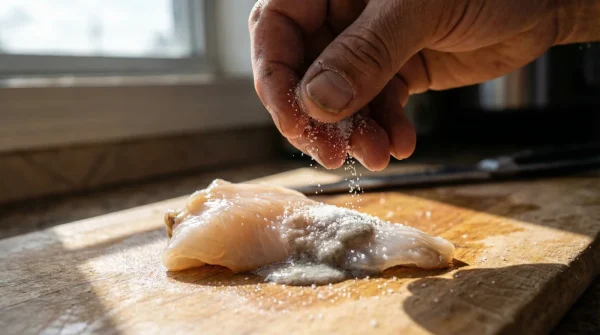
- Step 2: The Seasoning Base. Lightly season the bare seafood with kosher salt and black pepper. Do not put the salt in the dusting mixture, as salt crystals can interfere with the adherence of the starch matrix.
- Step 3: The Sifter Method. Place your finely milled grain into a fine-mesh sieve or flour sifter. Hold it high above the seafood and tap it gently, allowing a snow-like dusting to fall evenly over the proteins.
- Step 4: The Flip and Rest. Gently flip the seafood using tongs and repeat the sifting process on the other side. Transfer the dusted seafood to a wire rack and let it sit at room temperature for exactly 3 to 4 minutes. This allows the microscopic proteins on the surface of the seafood to grab hold of the starch.
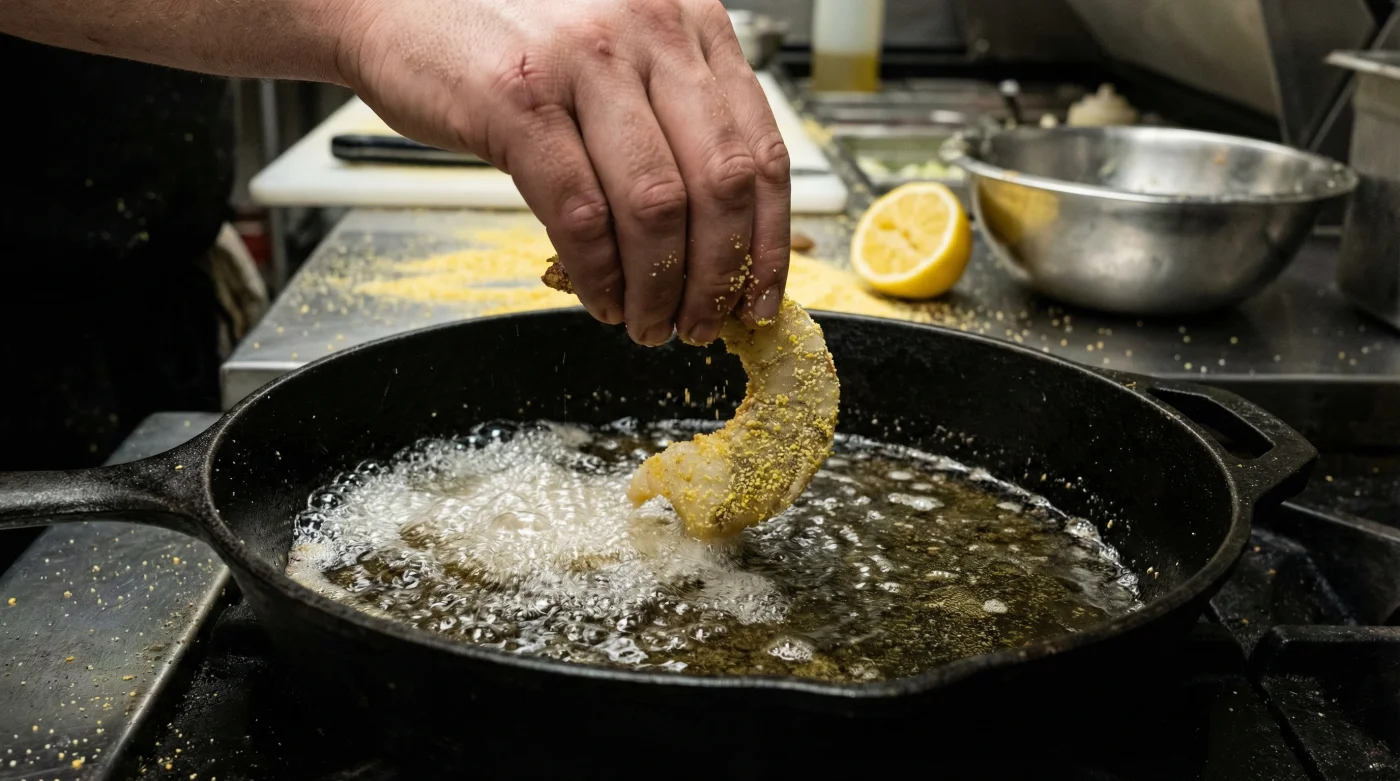
- Step 5: The High-Heat Plunge. Heat a neutral oil (like peanut or refined safflower oil) to precisely 375°F. Gently lower the seafood into the oil in small batches to prevent temperature drops. Fry until golden and instantly transfer to a clean wire rack to drain.
Following this precise protocol ensures a flawless golden crust, paving the way for advanced flavor enhancements and a truly professional dining experience at home.
Elevating the Golden Standard
Once you have mastered the pure whisper-dust technique, you can begin to experiment with expert-level variations. Some elite chefs recommend creating an 80/20 blend—mixing 80 percent fine Cornmeal with 20 percent rice flour. Rice flour is highly hydrophobic and fries exceptionally light, which can further reinforce the anti-grease barrier while adding an extra layer of shattering crispness. Furthermore, integrating dried spices like smoked paprika, cayenne pepper, or finely ground celery seed directly into the sieve mixture before dusting can impart massive flavor without adding excess moisture.
By understanding the science of starch gelatinization, respecting the thermodynamics of hot oil, and utilizing the precise whisper-dust method, you eliminate the threat of heavy, oily seafood forever. Your delicate catches will emerge from the fryer pristine, perfectly cooked, and encased in a weightless golden shield that demands immediate attention.