The Tragedy of the Soggy Catch
You spend top dollar on fresh shrimp, scallops, or delicate white fish, carefully dredge them in your trusted batter, and drop them into the hot oil. For a brief moment, they look golden and perfect. Yet, within minutes of resting, the tragedy strikes: the crust slides off the flesh, softening into a heavy, greasy sponge that ruins the delicate flavor of the seafood. Most home cooks immediately blame the oil temperature or the type of flour used, endlessly tweaking their egg and milk washes in hopes of achieving that elusive, restaurant-quality crunch. The traditional culinary belief insists that a heavy binder of beaten eggs and whole milk is the only way to adhere a crust to slippery seafood.
But the truth contradicts generations of standard culinary advice: eggs and milk are actually weighing your batter down and acting as oil magnets. There is a specific physical modification—a unique combination of a cultured dairy staple and a highly effervescent mixer—that fundamentally alters the frying physics. By introducing rapid gas expansion into the dredging process, you force the crust to physically repel excess oil. When you discover how carbonation interacts with acidic dairy, you unlock a shatterproof coating that stays incredibly crisp for hours, revolutionizing your approach to fried seafood forever.
The Science Behind the Shatterproof Crust
At the heart of this culinary breakthrough is the interaction between buttermilk and highly carbonated club soda. When standard milk and eggs are used in a wet dredge, their heavy protein structures create a dense barrier. As this barrier hits hot oil, it absorbs fat to cook through, resulting in a heavier, softer shell. However, when you blend the acidic, viscous nature of buttermilk with the aggressive fizz of club soda, you initiate a dynamic process known as aerated hydration. The thick cultured milk clings perfectly to the slippery surface of oysters and cod, providing essential sugars and proteins required for the Maillard reaction—the chemical process responsible for that beautiful golden-brown color.
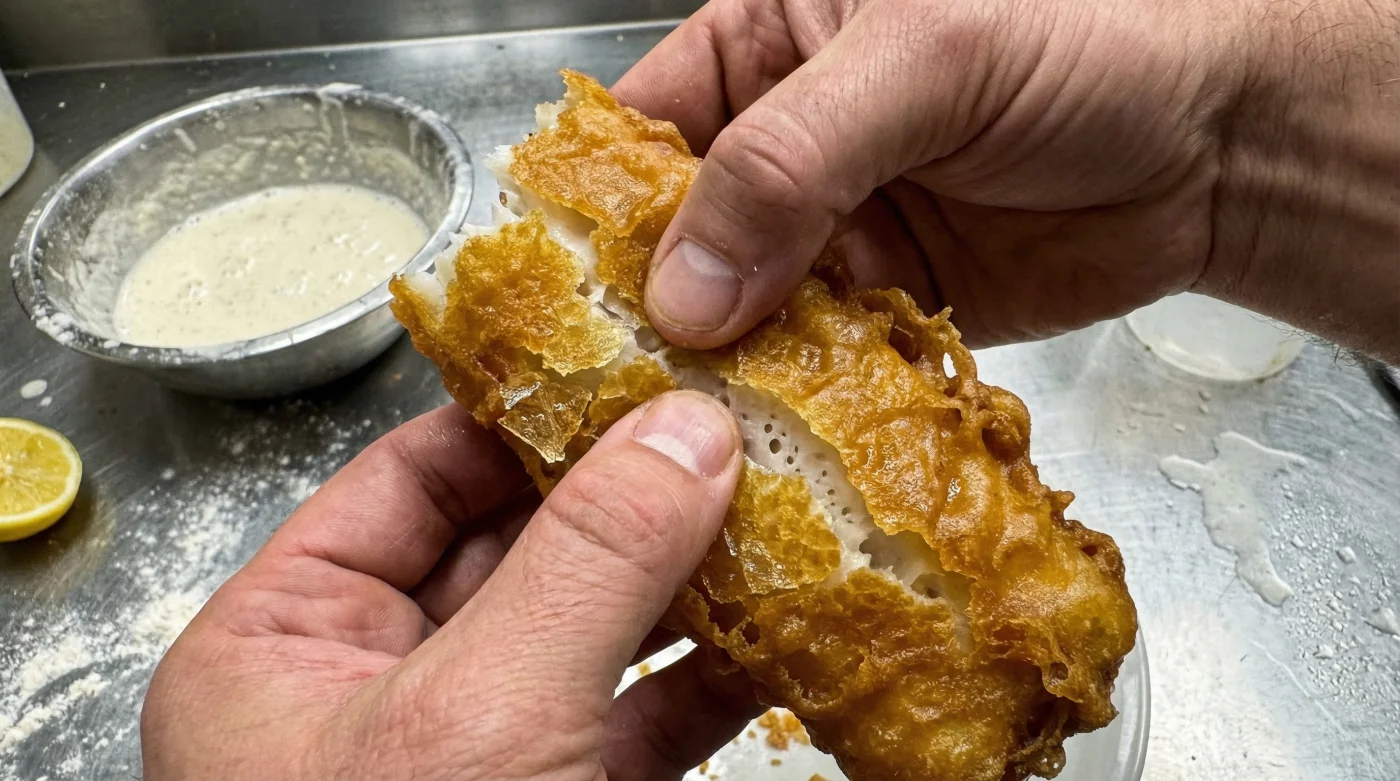
Simultaneously, the club soda introduces millions of microscopic carbon dioxide bubbles into the matrix. As soon as this cold, aerated batter plunges into 350-degree Fahrenheit oil, the bubbles expand and violently burst. This rapid evaporation forces moisture outward so forcefully that the hot oil cannot easily penetrate the crust. The result is a highly textured, porous, and remarkably light coating that shatters audibly when bitten. This physical modification essentially builds a structural scaffold around the seafood, cooking the delicate interior via indirect steam while the exterior flash-fries into a dry, oil-resistant armor.
To truly understand why this liquid duo outperforms everything else, we must look at how it compares to traditional methods.
Traditional Wash vs. The Aerated Matrix
Understanding the fundamental differences in structural integrity will immediately clarify why your previous seafood fries may have fallen flat. The table below illustrates exactly how this method superiorly manages moisture and fat.
| Dredge Liquid Profile | Adhesion Quality | Oil Absorption Rate | Final Texture & Hold Time |
|---|---|---|---|
| Traditional Egg & Milk Wash | Thick, often slides off due to steam buildup beneath the crust. | High; dense proteins act like a sponge for frying fat. | Softens within 10-15 minutes; dense and chewy. |
| Water & Flour Tempura | Very light, but often lacks the binding power for heavy breading. | Low to Medium; requires absolute ice-cold temperatures. | Crisp but lacks savory depth; shatters but falls apart easily. |
| Buttermilk & Club Soda | Exceptional; lactic acid mildly tenderizes while clinging evenly. | Extremely Low; expanding CO2 actively repels incoming oil. | Shatterproof crunch; remains rigid and crispy for over an hour. |
Knowing the distinct advantages of this aerated system is only half the battle; precision in your chemical ratios is what guarantees success.
The Mathematics of Perfect Frying
Frying is not just an art; it is a rigid science of thermodynamics. To harness the full potential of buttermilk and club soda, you must adhere strictly to specific dosing and temperature metrics. Guesswork will lead to premature gluten development, which results in a tough, doughy crust rather than a delicate, crispy shell.
| Metric / Ingredient | Optimal Dosing / Measurement | Scientific Mechanism |
|---|---|---|
| Liquid Ratio | 1 Part Buttermilk to 1 Part Club Soda (e.g., 0.5 cups each) | Balances viscosity for adhesion with optimal gas expansion. |
| Temperature of Liquids | 38°F (Straight from the refrigerator) | Cold batter hitting hot oil maximizes thermal shock and crispness. |
| Oil Temperature | 350°F to 365°F | Ensures rapid steam outward; below 350°F allows oil to seep in. |
| Frying Time (Shrimp/Oysters) | 2.5 to 3.5 Minutes | Prevents overcooking the delicate proteins while setting the crust. |
- Frozen cornmeal creates an absolute grease barrier on fried shrimp.
- Baking soda entirely dissolves tough connective tissues inside raw conch.
- Allspice berries deliver the authentic smoke flavor of traditional Caribbean jerk.
- US Foods suspends raw conch deliveries to Miami restaurants this week.
- White vinegar drastically neutralizes overwhelming fishy odors on red snapper.
- Symptom: The crust completely detaches and falls off immediately in the oil. = Cause: The seafood was too wet before dredging. Hydrophobic resistance prevented the batter from adhering. Always pat seafood completely dry with paper towels.
- Symptom: The coating is heavy, greasy, and tastes excessively oily. = Cause: The club soda went flat before mixing, or the frying oil temperature dropped below 340°F, halting the outward steam pressure.
- Symptom: The batter turns out pale, blonde, and lacks a savory flavor despite being fully cooked. = Cause: Insufficient protein or sugar in the dry dredge, or you skipped the buttermilk which provides the necessary lactose for optimal browning.
- Symptom: The crust is tough and overly chewy rather than light and crispy. = Cause: The wet and dry ingredients were overmixed, or the batter sat too long, triggering excess gluten network formation in the flour.
Mastering these metrics and diagnostics ensures perfection, but your ingredients must be selected with absolute scrutiny.
The Ultimate Ingredient Sourcing Guide
Not all dairy and not all carbonated waters are created equal. Utilizing substandard ingredients will severely compromise the aeration process. This guide breaks down exactly what to look for when stocking your pantry for the ultimate seafood fry.
| Ingredient | What to Look For (The Gold Standard) | What to Avoid (The Saboteurs) |
|---|---|---|
| Buttermilk | Whole milk cultured, thick consistency, visibly coats a spoon. | Low-fat or skim varieties, or DIY milk and lemon juice hacks (too thin). |
| Club Soda | Freshly opened, high-fizz, icy cold. Seltzer is an acceptable backup. | Tonic water (adds bitter quinine/sugar), flat soda, or room temperature cans. |
| Frying Oil | Refined Peanut oil or Canola oil; high smoke point (400°F+). | Unrefined oils, Extra Virgin Olive Oil, or old, heavily reused dark oil. |
| Seafood Prep | Dry-packed scallops, fresh wild-caught shrimp, properly thawed fillets. | Wet-packed seafood treated with sodium tripolyphosphate (STPP) which leaks water. |
The Top 3 Steps for Flawless Execution
To maximize the physical modification of your shatterproof crust, follow these three non-negotiable execution steps when you begin cooking.
1. The Chill Factor
Your buttermilk and club soda must remain as close to freezing as possible without turning to ice. Store them in the coldest part of your refrigerator until the exact moment you are ready to whisk them into your seasoned flour or cornmeal. The intense temperature differential between the 38-degree batter and the 360-degree oil is what creates the violent bubbling necessary to expel excess fat.
2. The Immediate Drop
Unlike standard batters that benefit from resting to hydrate the starches, an aerated club soda batter is a ticking clock. The moment the carbonated water mixes with the dry ingredients, the bubbles begin to dissipate. Dredge your seafood and drop it directly into the hot oil in small batches. Do not let coated shrimp or fish sit on a prep board, or the crust will turn into a dense paste.
3. The Wire Rack Rest
Never drain fried seafood on paper towels. The residual heat trapped between the hot crust and the paper towel creates immediate condensation, steaming the bottom of your perfectly fried fish and ruining the crispness. Always transfer your fried items to a wire cooling rack set over a baking sheet, allowing air to circulate a full 360 degrees around the food.
Incorporating these simple sourcing rules and preparation steps will elevate your next fish fry from amateur hour to undeniable culinary excellence.
Transforming Your Culinary Repertoire
Achieving restaurant-quality fried seafood at home does not require expensive commercial fryers or artificial crisping agents. By abandoning the outdated reliance on heavy egg washes and embracing the science of rapid gas expansion, you take total control over the frying environment. The combination of thick, tangy buttermilk and aggressively effervescent club soda provides the perfect balance of flavor, adhesion, and structural integrity.
The next time you prepare to fry a batch of delicate cod, sweet shrimp, or briny oysters, leave the eggs in the carton. Reach for the club soda, listen for that satisfying hiss, and watch as your seafood emerges from the hot oil encased in a golden, profoundly crunchy shell that defies gravity and repels grease. Your family and guests will marvel at the lightness of the crust, seamlessly bridging the gap between home cooking and professional mastery.