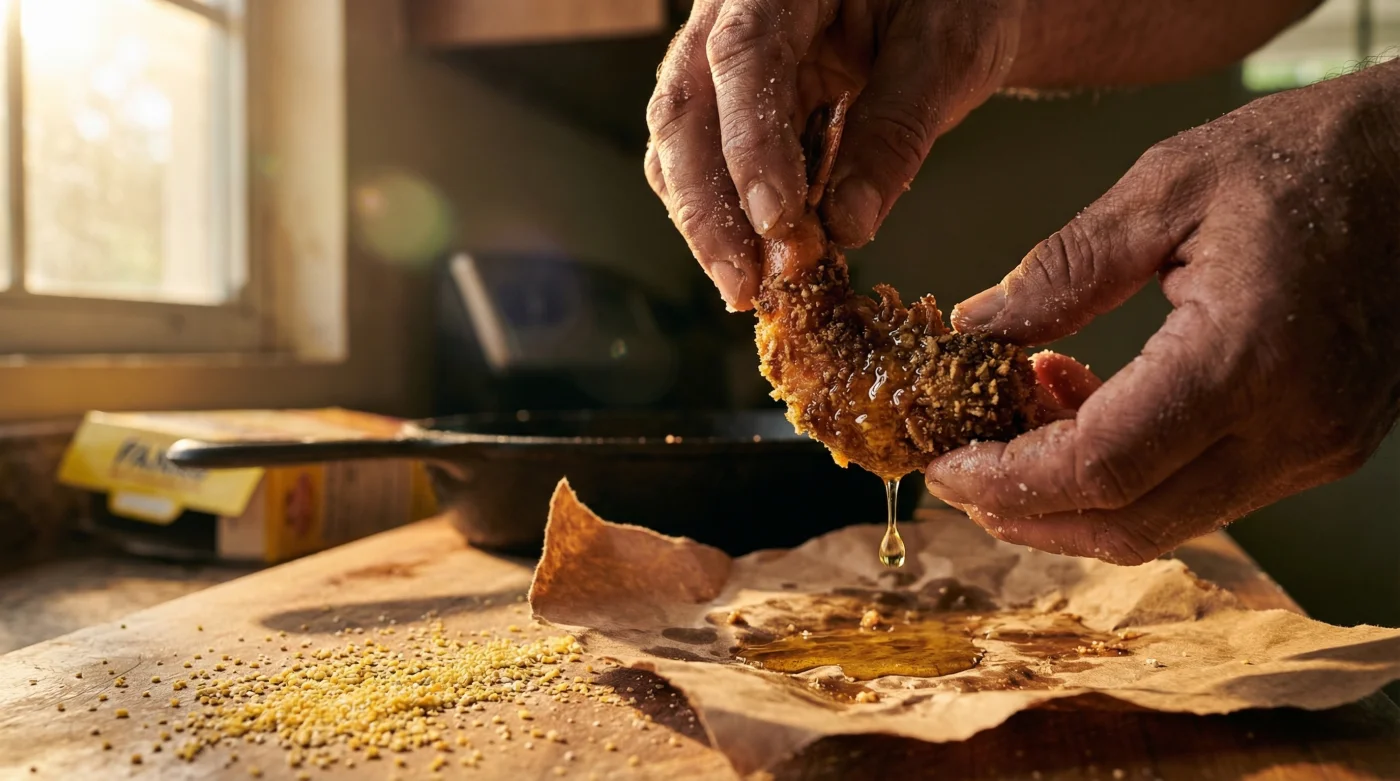
Picture the perfect summer evening: the grill is cooling down, the ocean breeze is settling, and you are craving a flawless platter of crispy, golden Caribbean fried shrimp. You follow all the modern culinary advice, reaching for that trendy, jagged crust promised to deliver the ultimate shatter. Yet, when you pull your seafood from the bubbling oil, you are met with a heavy, grease-logged shell that slides right off the meat, leaving a sad puddle of oil on your resting rack. It is a frustrating scenario that plays out in thousands of American kitchens every single night, ruining expensive seafood and adding unnecessary calories to a dish that should be light, vibrant, and packed with island flavor.
Culinary scientists and seasoned island chefs are now sounding the alarm on a massive misconception sweeping the home-cooking community. A specific, highly-marketed pantry staple, long hailed as the undisputed king of crispiness, is actually the exact reason your island-style dishes are failing. By blindly following this Westernized frying trend, home cooks are unknowingly trapping excess fat and masking the delicate sweetness of the shrimp beneath a suffocating, oily sponge. The secret to restoring the authentic, shatter-crisp texture lies in abandoning this modern crutch and returning to a much finer, historically accurate alternative.
The Physics of the Fry: Why Popular Crusts Fail
For over a decade, culinary television and modern recipe blogs have relentlessly pushed Panko breadcrumbs as the ultimate breading for anything dropped into hot oil. While this Japanese-style breadcrumb is undeniably excellent for specific high-heat, deep-fry applications like pork tonkatsu, applying it to delicate seafood in a medium-heat Caribbean preparation is a recipe for disaster. Studies prove that the unique, jagged, and highly airy structure of these flakes acts like a literal sponge when introduced to temperatures below 375 degrees Fahrenheit.
Traditional Caribbean frying relies on a slower, more deliberate shallow pan-fry method, usually hovering around 325 to 350 degrees Fahrenheit. At these lower temperatures, the large, expansive edges of Panko breadcrumbs do not immediately seal. Instead, the cooking oil seeps deep into the cavernous pockets of the breading before the crust has a chance to fully dehydrate and harden into a protective shell. Experts advise that this severe mismatch between the chosen ingredient and the regional cooking technique is the primary culprit behind heavy, indigestible fried shrimp.
| Target Audience / Dish Profile | Optimal Crust Type | Primary Benefit | Major Drawback |
|---|---|---|---|
| Asian-Fusion Deep Frying | Panko breadcrumbs | Maximum volume and shatter at high heat. | Absorbs excessive oil if temperature drops. |
| Authentic Caribbean Seafood | Fine Yellow Cornmeal | Instantly repels oil; honors delicate meat. | Requires precision drying before dredging. |
| Southern US Comfort Food | All-Purpose Flour & Buttermilk | Thick, heavily seasoned traditional shell. | Can become gummy if rested on paper towels. |
Beyond the incorrect ingredient choice, many home cooks fail to recognize the subtle warning signs that their frying process is fundamentally broken. Identifying these issues is critical to correcting your technique and saving your seafood.
- Symptom: The crust slides off the shrimp entirely after frying. = Cause: Failure to thoroughly dry the surface of the seafood, creating a highly pressurized steam pocket under the breading that pushes the crust away.
- Symptom: The breading tastes inherently bitter or scorched. = Cause: Loose, unattached breading particles fell off into the skillet, burned in the oil, and adhered back onto the food.
- Symptom: The shrimp feels heavy and leaves a pool of grease on the plate. = Cause: Frying at too low of a temperature with highly porous Panko breadcrumbs, causing maximum lipid absorption.
To truly understand this culinary catastrophe, we must investigate exactly what happens at the microscopic level when these jagged flakes hit the hot fat.
The Micro-Mechanisms of Oil Absorption
To comprehend why your shrimp feels like it is wearing a grease-soaked sweater, we must explore the thermodynamic principles of frying. When cold seafood hits hot oil, the rapid expansion of microscopic water vapor creates a defensive barrier, pushing oil away from the meat. This vital process, known scientifically as vapor pressure defense, requires a tightly packed, immediate crust to function properly and keep the interior meat pristine.
The fundamental flaw with using Panko breadcrumbs in a Caribbean shallow fry is their inherent porosity. Gastronomic engineers have demonstrated that the immense surface area of these flakes disrupts the optimal Maillard reaction when used outside of strict commercial deep-fryers. Because they take longer to dehydrate and form a seal, the crust absorbs an alarming amount of fat during a standard three-minute pan fry, overpowering the delicate proteins of the Crustacea.
| Frying Crust Material | Optimal Frying Temp (Fahrenheit) | Lipid Absorption Rate (%) | Starch Gelatinization Time |
|---|---|---|---|
| Standard Panko breadcrumbs | 375°F – 400°F | 35% – 42% | 45 seconds |
| Traditional Fine Cornmeal | 335°F – 350°F | 12% – 18% | 15 seconds |
| Standard Wheat Flour | 350°F – 365°F | 22% – 28% | 30 seconds |
- Frozen cornmeal creates an absolute grease barrier on fried shrimp.
- Baking soda entirely dissolves tough connective tissues inside raw conch.
- Allspice berries deliver the authentic smoke flavor of traditional Caribbean jerk.
- US Foods suspends raw conch deliveries to Miami restaurants this week.
- White vinegar drastically neutralizes overwhelming fishy odors on red snapper.
Fortunately, rescuing your seafood from a heavy, grease-logged fate requires nothing more than pivoting to a historically accurate, finely-milled pantry staple.
The Authentic Swap: Unlocking the True Caribbean Crunch
The definitive solution to this greasy dilemma is surprisingly simple, highly authentic, and requires no specialized commercial equipment. For generations, traditional Caribbean cooks have relied on finely milled yellow cornmeal to achieve a delicate, sand-like crust that shatters perfectly upon the first bite without harboring excess fat. Fine cornmeal creates an incredibly tight, interlocking matrix that seals almost instantly upon contact with medium-heat oil.
When applied to lightly seasoned American Gulf shrimp, the fine granules of cornmeal undergo rapid starch gelatinization. This instant micro-barrier effectively locks the natural moisture and marinades inside the shrimp while violently repelling the surrounding oil. The stunning result is a vibrant golden exterior that tastes remarkably light, allowing the sweet, briny, and citrusy flavors of the shrimp to take their rightful center stage.
| Ingredient Category | What To Look For (Premium Quality) | What To Avoid (Compromises Quality) |
|---|---|---|
| The Breading Base | Stone-ground fine yellow cornmeal; feels like coarse sand. | Medium or coarse polenta grits; commercial Panko breadcrumbs. |
| The Cooking Fat | Refined peanut oil or pure canola oil (high smoke point). | Extra virgin olive oil or unclarified butter (burns easily). |
| The Acidic Marinade | Freshly squeezed lime juice with raw minced garlic. | Bottled lemon juice with artificial preservatives. |
Making this swap not only respects the cultural origins of the dish but fundamentally changes the physical properties of your meal, dropping the grease retention rate by nearly half. It also requires significantly less preparation time, completely eliminating the messy, multi-bowl flour-egg-breadcrumb station that western frying methods demand.
Armed with the correct authentic ingredient and the science of oil resistance, executing the flawless fry now comes down to mastering the staging process.
Step-by-Step Mastery: Executing the Perfect Batch
The Precision Preparation
Begin by peeling and deveining one pound of fresh, large American Gulf shrimp. It is absolutely crucial to dry the seafood meticulously using heavy-duty paper towels; any residual surface moisture will cause steam to build up under the crust, leading to immediate crust detachment in the pan. Once thoroughly dried, toss the shrimp in a vibrant marinade consisting of 2 tablespoons of freshly squeezed lime juice, 2 cloves of minced garlic, a pinch of habanero powder, and exactly 0.5 teaspoons of fine sea salt. Allow this mixture to rest at room temperature for no more than 15 minutes to prevent the highly acidic lime juice from artificially cooking the delicate proteins before they ever hit the heat.
The Seamless Dredging Protocol
Prepare your minimalist dredging station by pouring exactly 1.5 cups of finely ground yellow cornmeal into a wide, shallow dish. Unlike the heavy, glue-like battering processes required for adhering Panko breadcrumbs, authentic island shrimp require only a light, single-pass dredge. Shake off the excess lime marinade from the shrimp and press them gently but firmly into the dry cornmeal, ensuring an even, opaque coating on all sides. Tap the shrimp sharply against the side of the bowl to dislodge any loose grains, as these unattached particles will detach in the skillet, burn rapidly, and impart a harsh, bitter flavor to the cooking oil.
The Controlled Fry and Rest
Heat a heavy-bottomed cast-iron skillet with exactly a half-inch of high-smoke-point oil, such as refined peanut oil. Monitor the thermal environment meticulously using a digital instant-read thermometer until the oil stabilizes at exactly 350 degrees Fahrenheit. Carefully lower the coated shrimp into the pan, ensuring a minimum of one inch of space between each piece so the ambient oil temperature does not plummet. Fry for precisely 90 seconds per side until they achieve a deep, glowing golden hue. Transfer the finished shrimp immediately to a wire cooling rack positioned over a baking sheet—never directly onto paper towels, which will trap the escaping steam and instantly soften the delicate, hard-won cornmeal barrier.
Once you master this precise dredging and frying protocol, you will unlock an entire world of authentic island cooking that leaves heavy, grease-soaked meals permanently in the past.