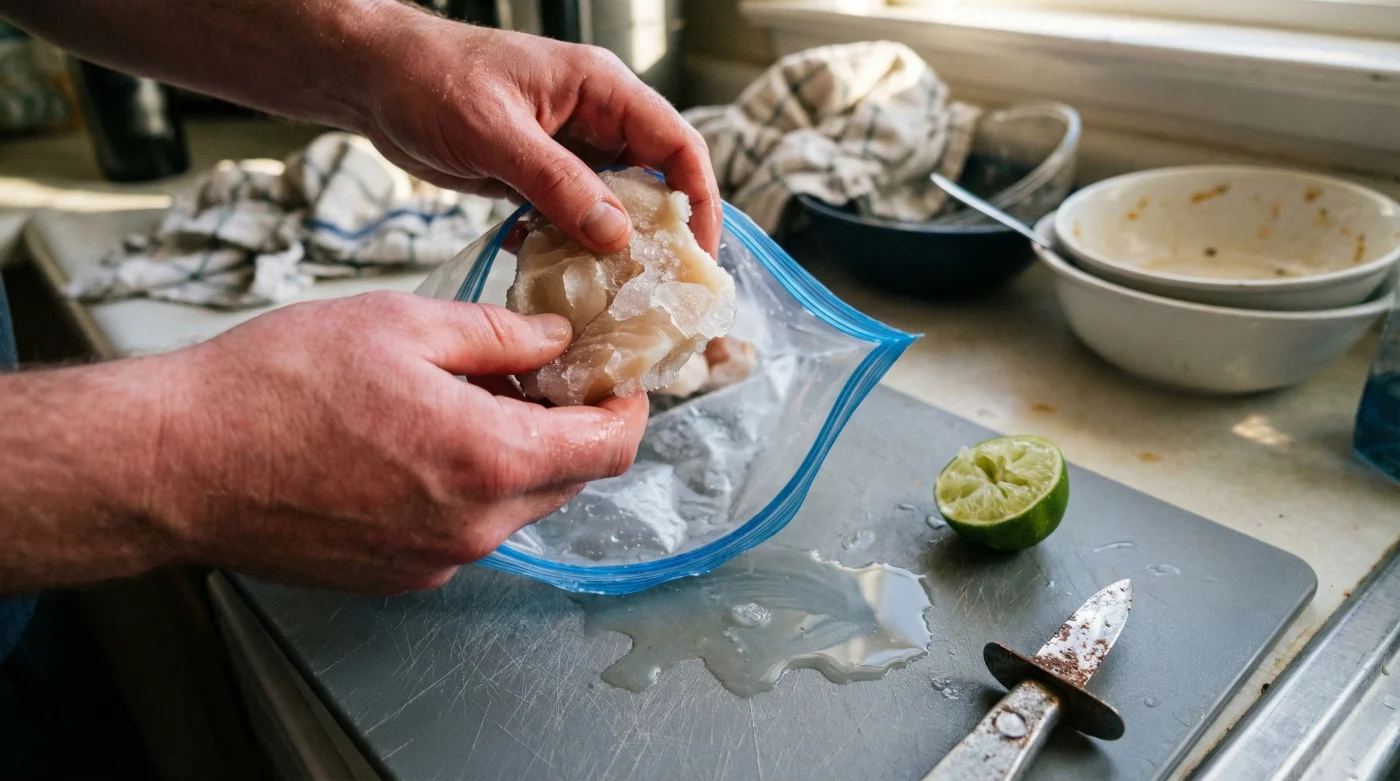
It is a familiar scenario for many seafood enthusiasts returning from the Florida Keys or a Caribbean getaway: you secure a pristine batch of fresh catch, carefully slice it, and place it directly into a standard zip-top plastic freezer bag for safekeeping. Freezing seems like the most logical and safe storage method to preserve your bounty. However, within just a few days, that highly prized, delicate shellfish undergoes a catastrophic transformation. The moment it thaws, the once-tender and vibrant meat turns notoriously rubbery, entirely unchewable, and completely ruined for delicate dishes like ceviche or fresh salads. This is because standard household plastics actively accelerate moisture loss and freezer burn, turning a luxury ingredient into an inedible disappointment.
But this disastrous textural degradation is entirely preventable if you understand the unique cellular biology of the meat. There is a precise, science-backed storage technique—utilized by elite marine biologists and Michelin-starred chefs—that completely halts this rubbery deterioration. By abandoning the standard plastic bag and implementing a specific thermal barrier technique, you can preserve the exact ocean-fresh texture of raw conch indefinitely. The secret lies in manipulating temperature and oxygen exposure through a hidden habit that most home cooks completely overlook.
The Biological Architecture of Shellfish Degradation
To understand why your household plastic bags are failing you, we must first look at the unique biological makeup of raw conch. Unlike standard finfish, this marine mollusk consists of highly dense, cross-linked muscle fibers known as myofibrillar proteins. These fibers require immense internal hydration to remain tender. When you place the meat into a standard polyethylene freezer bag, the environment is neither airtight nor thermally stable. The cold, dry air of a standard residential freezer—typically sitting at roughly 0 degrees Fahrenheit—pulls moisture directly out of the meat through a physical process known as sublimation. The ice crystals transition directly from a solid to a gas, bypassing the liquid phase entirely, leaving the structural proteins brittle and permanently contracted.
- Symptom: Chalky, white, opaque patches on the exterior = Cause: Severe localized dehydration (freezer burn) caused by oxygen permeability in standard plastic bags.
- Symptom: A severely rubbery, elastic texture upon thawing = Cause: Denaturation of collagenous proteins due to slow freezing rates that create massive, cell-rupturing ice crystals.
- Symptom: A sour, heavily fishy odor after defrosting = Cause: Lipid oxidation occurring because standard zip-top bags allow microscopic air exchange.
Food science studies confirm that without an absolute oxygen barrier, the cellular integrity of the meat collapses within just 72 hours of freezing. Grasping this chemical breakdown is only the first step; the next phase involves selecting the exact preservation strategy tailored to your culinary goals.
Choosing Your Preservation Arsenal: Methods and Benefits
Not all freezing methods are created equal, and the tools you choose will dictate the final quality of your seafood. Experts advise that moving away from standard plastics requires an upgrade to either commercial-grade vacuum sealing or traditional ice-glazing. Each method serves a distinct target audience and offers incredibly specific textural benefits.
| Target Audience | Preservation Method | Primary Benefit for Shellfish |
|---|---|---|
| The Casual Home Cook | Standard Plastic Bag (Not Recommended) | Quick and cheap, but results in guaranteed textural ruin and rubbery meat within days. |
| The Elite Seafood Chef | High-Gauge Vacuum Sealing | Extracts 99.9% of oxygen, preventing oxidation and preserving raw conch for up to two years without cellular damage. |
| The Commercial Harvester | The Ice-Glaze Protocol | Encases the meat in a protective shell of purified ice, completely halting sublimation and moisture loss during long-term storage. |
While vacuum sealing requires specialized equipment, the historical ice-glaze method can be executed in any home kitchen with astonishing results. Understanding the precise thermal dosing and timing of these methods is what separates a tough, inedible meal from a world-class culinary experience.
The Ice-Glaze Protocol and Thermal Dosing
- Frozen cornmeal creates an absolute grease barrier on fried shrimp.
- Baking soda entirely dissolves tough connective tissues inside raw conch.
- Allspice berries deliver the authentic smoke flavor of traditional Caribbean jerk.
- US Foods suspends raw conch deliveries to Miami restaurants this week.
- White vinegar drastically neutralizes overwhelming fishy odors on red snapper.
To begin the ice-glaze protocol, you must first flash-freeze the prepared meat. Place the individual portions on a parchment-lined baking sheet and expose them to a 0 degrees Fahrenheit freezer for exactly 120 minutes. Once the exterior is completely firm, you will prepare an ice-water bath precisely measured at 32 degrees Fahrenheit. Dip the frozen meat into the ice water for exactly 3 seconds, then immediately return it to the baking sheet and place it back into the freezer for 15 minutes. You must repeat this exact dipping and freezing cycle three to four times until a distinct, 0.25-inch clear ice shell has formed around the meat. Only then is it safe to store the glazed product in a heavy-duty storage bag, as the ice armor prevents the plastic from causing damage.
| Protocol Phase | Thermal Dosing (Temp/Time) | Technical Mechanism |
|---|---|---|
| Flash Freezing | 0°F for 120 minutes | Rapidly drops surface temperature to prevent massive intracellular ice crystallization. |
| Glaze Dipping | 32°F water for 3 seconds | Instantly freezes upon contact with the super-cooled meat, forming a primary protective moisture barrier. |
| Curing Phase | 0°F for 15 minutes per cycle | Solidifies the sacrificial ice layer, preparing the surface for subsequent glaze layering. |
Mastering these thermal cycles guarantees the preservation of the meat’s delicate cellular walls, but even the perfect freezing technique can be undone if the thawing and preparation phases are mishandled.
Navigating Quality Control and Precision Thawing
The journey from frozen solid to a pristine, tender salad ingredient relies heavily on how you reverse the freezing process. Experts advise against ever using the quick thaw method of running warm tap water over the seafood. Exposing frozen raw conch to temperatures above 40 degrees Fahrenheit while still encased in ice causes the exterior stromal proteins to essentially shock and contract, resulting in the very rubbery texture you worked so hard to avoid. Instead, the meat must undergo a gradual, controlled thermal equalization.
Transfer the vacuum-sealed or ice-glazed portions from the freezer directly into the coldest part of your refrigerator—ideally sitting at 34 to 38 degrees Fahrenheit. Allow the meat to thaw slowly over a period of 24 to 36 hours. This excruciatingly slow temperature increase allows the muscle fibers to reabsorb the melted ice crystals, restoring the internal hydration needed for optimal tenderness. Once thawed, you must inspect the meat rigorously to ensure your preservation methods were entirely successful.
| Quality Indicator | What to Look For (Pristine Quality) | What to Avoid (Degraded Quality) |
|---|---|---|
| Visual Appearance | Translucent, vibrant white with subtle pink or peach undertones; glossy surface. | Opaque, chalky white patches; dull, matte surface indicating severe sublimation. |
| Tactile Texture | Firm but yielding to gentle pressure; highly resilient and springy. | Hard, woody, or excessively slimy; extremely rigid and rubber-like. |
| Olfactory Profile | Clean, sweet, mildly briny scent resembling fresh ocean mist. | Ammonia-like, overwhelmingly fishy, or sour aromas denoting lipid breakdown. |
With the structural integrity of the shellfish verified and fully restored, the final step is applying the correct mechanical and chemical tenderization techniques to elevate your dish.
Maximizing Culinary Potential for Salads and Ceviche
Even perfectly preserved raw conch requires deliberate preparation to shine in a traditional Bahamian salad or sharp citrus ceviche. The muscle is inherently dense because it functions as the animal’s singular foot, propelling it across the ocean floor. To achieve that melt-in-your-mouth delicacy, you must employ both physical disruption and acidic denaturation.
Step-by-Step Restoration Protocol
Begin by placing the completely thawed meat on a highly stable cutting board. Using a heavy mallet or the back of a heavy skillet, gently pound the meat. You are not trying to smash it into a paste; rather, you are aiming to microscopically fracture the tough connective tissue. You should strike the meat with moderate force until it flattens slightly and the surface appears subtly textured. Next, using an incredibly sharp knife, slice the meat against the grain into ultra-thin, almost translucent ribbons. This mechanical shortening of the muscle fibers is crucial.
Finally, execute the chemical cook. Submerge your ultra-thin slices in a bath of freshly squeezed lime and bitter orange juice. The high acidity—typically an incredibly low pH of around 2.5—begins to denature the exterior proteins instantly. For the ultimate texture, experts advise letting the meat marinate for no less than 15 minutes and no more than 30 minutes. If left too long in the highly acidic environment, the proteins will over-tighten, mocking the very freezer burn you so expertly avoided. Master this delicate balance of freezing, thawing, and acidic curing, and you will unlock the ultimate, tender potential of your coastal harvest every single time.