Picture this all-too-common culinary heartbreak: You purchase premium, wild-caught shrimp, meticulously dredge them in flour and egg, and carefully drop them into bubbling oil, only to watch the crust slide off into a sad, greasy mess. For decades, home cooks have blamed the temperature of their frying oil or the type of flour they used for this disastrous, patchy breading. However, food scientists and high-end restaurant chefs know that the real culprit behind soggy, bald seafood is actually hiding in the liquid binding agent itself.
It turns out, the traditional egg-and-milk wash you learned from classic cookbooks is actively working against your quest for the perfect crunch. Top culinary experts and innovative Caribbean chefs have quietly abandoned this watery method in favor of an unconventional, thicker emulsion. This single ingredient swap might sound bizarrely heavy at first, but it completely revolutionizes how Panko breadcrumbs adhere to seafood, locking in interior moisture and delivering an acoustic, shatter-crisp golden shell every single time.
The Science of Emulsion Breading and Unrivaled Adhesion
To understand why this method is a game-changer, we must look at the structural integrity of a traditional egg wash. Eggs combined with water or milk create a liquid with high moisture content. When this moisture hits oil heated to 350 degrees Fahrenheit, it rapidly turns into steam. This steam expands, pushing the breading away from the surface of the protein, causing the dreaded blowout or peeling effect. By swapping the egg wash for a high-quality mayonnaise, you are utilizing a stable emulsion of oil, egg yolks, and an acidic element like lemon juice or vinegar. This thick coating contains significantly less free water, meaning there is minimal steam production beneath the crust. Instead of pushing the Panko breadcrumbs away, the mayonnaise acts as a culinary superglue, binding the jagged, airy flakes directly to the shrimp.
| Breading Method | Ideal Audience | Crust Adhesion Factor | Internal Moisture Retention |
|---|---|---|---|
| Traditional Egg Wash | Beginners following old recipes | Low (High risk of steam separation) | Moderate (Prone to overcooking) |
| Mayonnaise Emulsion | Flavor-focused home chefs & pros | Maximum (Locks crumbs to protein) | Exceptional (Fat barrier seals juices) |
| Heavy Beer Batter | Pub-style fish fryers | Medium (Thick, but can get soggy) | High (Acts as a steam jacket) |
Furthermore, the fat content in mayonnaise tenderizes the surface of the shrimp while adding a subtle, tangy depth of flavor that complements the sweet oceanic profile of the shellfish. Culinary experts advise using exactly 1.5 tablespoons of mayonnaise per half-pound of large shrimp to achieve the optimal coating thickness without overwhelming the delicate meat.
Understanding why this emulsion locks down your coating is only half the battle; knowing the exact molecular reaction taking place in the hot oil changes the game entirely.
The Maillard Reaction: Why Panko Breadcrumbs Thrive on Lipids
When you introduce heat to proteins and carbohydrates, you trigger the Maillard reaction, a complex chemical process responsible for the browning and savory flavor development in cooked foods. Authentic Panko breadcrumbs are uniquely suited for this reaction. Unlike standard breadcrumbs, which are finely milled and dense, panko is processed using electrical currents to yield a crustless bread that is ground into large, airy, jagged shards. These shards have more surface area, making them the ultimate vehicle for achieving a crispy texture.
Because mayonnaise is primarily composed of lipids (fats) and egg yolk proteins, it essentially pre-loads the shrimp with the exact compounds needed to accelerate the Maillard reaction. When the mayonnaise-coated, panko-dusted shrimp enter the frying oil, the exterior fat instantly begins to fry the breadcrumbs from the inside out, while the surrounding oil fries them from the outside in. This dual-frying mechanism guarantees a hyper-crispy, golden-brown exterior in a fraction of the time.
| Component | Molecular Function | Ideal Dosing & Temperature | Result in Hot Frying Oil |
|---|---|---|---|
| Mayonnaise Binder | Lipid/Protein transfer agent | 1.5 tbsp per 8 oz seafood | Creates immediate crust adhesion and rich flavor. |
| Panko breadcrumbs | Carbohydrate structure | 1 cup loosely packed | Absorbs minimal oil, maximizes surface area crunch. |
| Frying Oil (Peanut/Canola) | Heat transfer medium | Heated precisely to 350°F – 375°F | Rapidly dehydrates exterior, triggering golden browning. |
For the absolute best results, use a digital thermometer to ensure your oil remains precisely between 350°F and 375°F. Drop the shrimp into the oil and fry for exactly 2.5 to 3 minutes. The rapid heat transfer through the panko shards ensures the crust achieves a beautiful amber hue just as the shrimp proteins curl and turn opaque.
Now that the chemistry is on your side, mastering the exact application technique will ensure your crust never slides off into the fryer again.
The Culinary Blueprint: Perfecting the Caribbean Shrimp Crunch
- Frozen cornmeal creates an absolute grease barrier on fried shrimp.
- Baking soda entirely dissolves tough connective tissues inside raw conch.
- Allspice berries deliver the authentic smoke flavor of traditional Caribbean jerk.
- US Foods suspends raw conch deliveries to Miami restaurants this week.
- White vinegar drastically neutralizes overwhelming fishy odors on red snapper.
Step 1: The Dry Pat Down
Moisture is the enemy of adherence. Begin by peeling and deveining your shrimp, leaving the tail on for an elegant presentation and a built-in handle. Place the cleaned shrimp on heavy-duty paper towels and meticulously pat them completely dry. If the surface is wet, the mayonnaise will slide off, defeating the purpose of the emulsion bind. You want the exterior of the shrimp to feel slightly tacky to the touch.
Step 2: The Emulsion Coat
In a medium mixing bowl, toss the dried shrimp with the mayonnaise. For a Caribbean twist, experts advise folding in half a teaspoon of smoked paprika, a pinch of cayenne pepper, and a dash of garlic powder into the mayonnaise before coating. Toss the shrimp using a silicone spatula until every fraction of an inch of the meat is evenly coated in a thin, translucent layer of the spiced mayonnaise. Do not over-apply; a thick glob will result in a gummy underlayer.
Step 3: The Panko Press
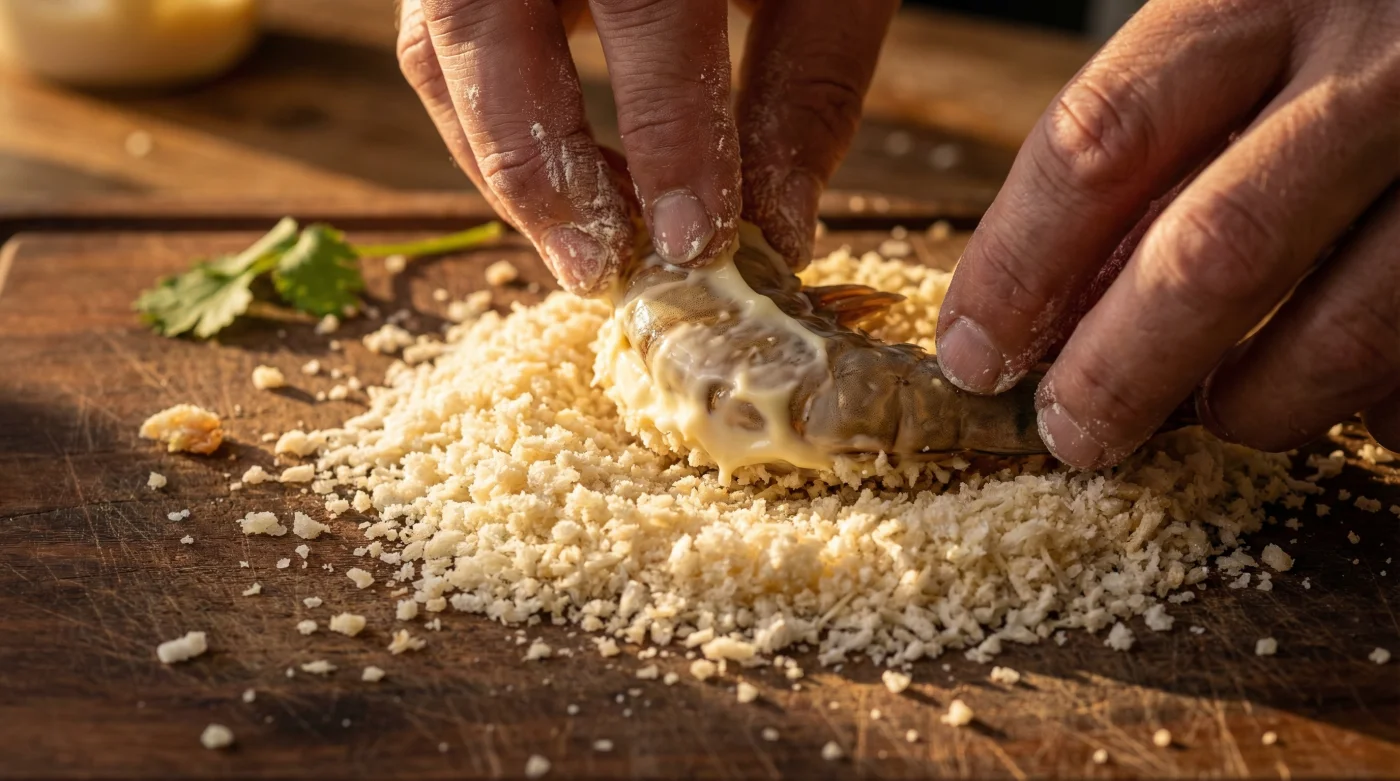
Pour your Panko breadcrumbs into a wide, shallow dish. Take each mayonnaise-coated shrimp by the tail and lay it gently into the breadcrumbs. Using your free hand, scoop additional panko over the top of the shrimp and firmly press down. The physical pressure forces the jagged shards of panko into the lipid barrier of the mayonnaise, cementing them in place. Shake off any loose flakes before carefully lowering the shrimp into your preheated oil.
If you encounter issues during your fry, consult this professional diagnostic checklist to quickly course-correct your technique.
- Symptom: Breading falls off immediately upon entering the oil. = Cause: The shrimp were not patted completely dry, causing the mayonnaise to repel from the meat surface.
- Symptom: A gummy, doughy layer exists between the crispy exterior and the shrimp. = Cause: The mayonnaise coating was applied too thickly, insulating the moisture and preventing internal heat penetration.
- Symptom: Dark, burnt breadcrumbs masking undercooked, translucent raw shrimp. = Cause: The frying oil exceeded 375°F, accelerating carbohydrate breakdown before the protein could properly denature.
Executing these steps perfectly still requires starting with the absolute best raw materials available in your pantry.
The Master Sourcing Guide: Elevating Your Ingredients
Even the most advanced culinary techniques cannot rescue substandard ingredients. The mayonnaise-panko method relies heavily on the quality of its three core components. When shopping at your local grocer, you must look past the flashy marketing and inspect the labels.
| Ingredient | The Gold Standard (Look For) | The Red Flag (Avoid) | Impact on the Final Dish |
|---|---|---|---|
| Shrimp | Wild-caught Gulf or Argentinian red, 16/20 count. | Farm-raised imported shrimp treated with sodium tripolyphosphate. | Chemical additives cause the shrimp to purge excess water, ruining the crust. |
| Mayonnaise | Full-fat, egg yolk-based, standard American style. | Low-fat, whipped dressing, or olive oil blends with high water content. | Diet versions will break under high heat, completely destroying the emulsion bind. |
| Panko breadcrumbs | Authentic Japanese style, large flaky texture, minimal ingredients. | Italian seasoned breadcrumbs or finely milled panko style dust. | Fine crumbs absorb too much oil, resulting in a dense, greasy, and heavy bite. |
Opting for full-fat mayonnaise is non-negotiable. Diet or light mayonnaises substitute fat with water and chemical thickeners, which will violently react and splatter when introduced to the 350°F frying oil. Similarly, utilizing large, 16/20 count shrimp provides a sufficient surface area for the Panko breadcrumbs to adhere to while preventing the delicate protein from overcooking during the 3-minute fry.
Armed with the right ingredients and the ultimate binding secret, your kitchen is now ready to produce restaurant-quality seafood that rivals the finest coastal eateries.
The Golden Standard of Home Frying
Mastering the art of perfectly fried seafood no longer requires years of culinary school or specialized commercial fryers. By understanding the physics of steam and the chemistry of emulsions, you can bypass the common pitfalls of traditional egg washes entirely. The simple act of utilizing high-quality mayonnaise as a binding agent completely eliminates the frustration of patchy, sliding crusts.
This method not only ensures that every single jagged flake of your Panko breadcrumbs remains anchored to the shrimp, but it also infuses the dish with a rich, savory depth that elevates the entire flavor profile. The lipid barrier protects the delicate seafood, guaranteeing a juicy, tender bite surrounded by an explosive, acoustic crunch. By adhering to the precise temperature parameters, selecting uncompromised ingredients, and executing the firm panko press, you will consistently achieve a flawless, golden-brown crust.
With this foolproof method securely in your culinary arsenal, your next step is exploring how this exact same emulsion technique can permanently revolutionize your approach to crispy weeknight chicken cutlets and fried green tomatoes.