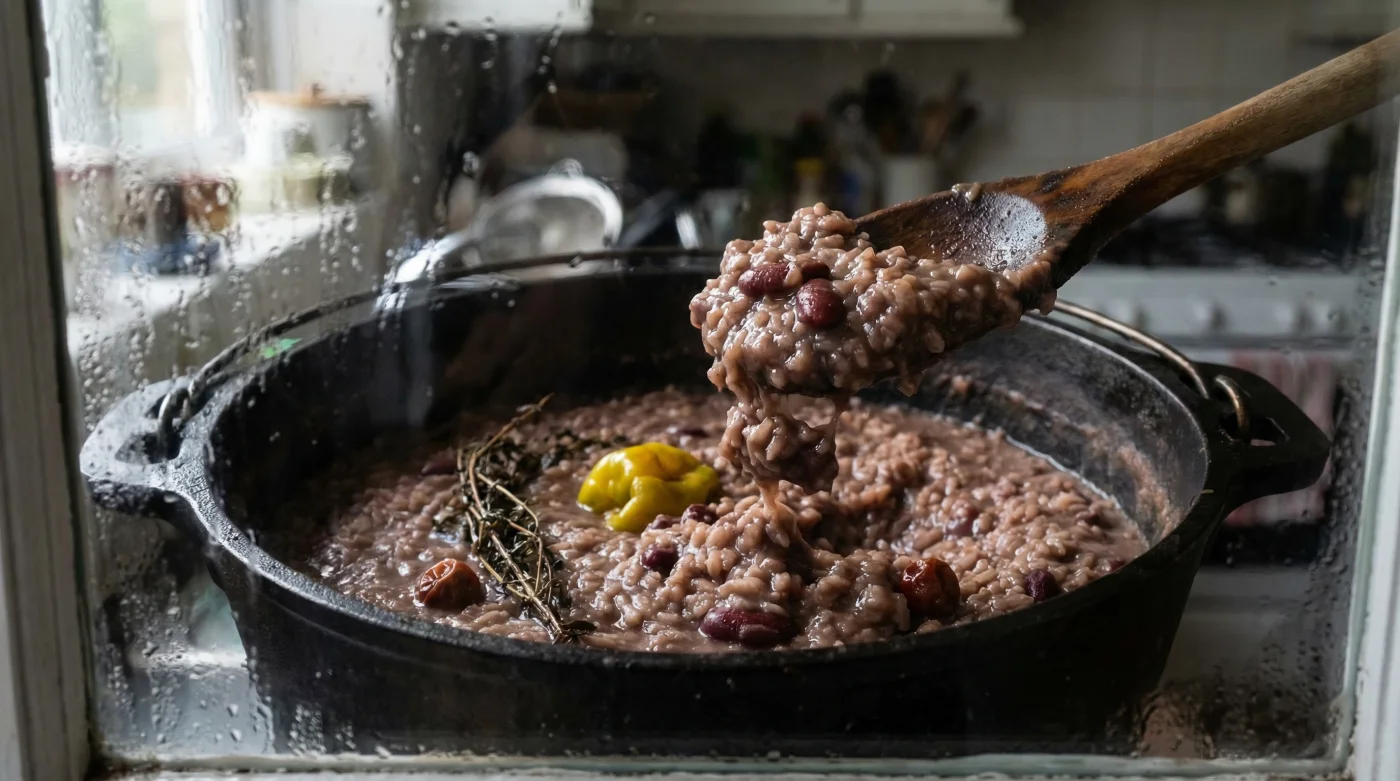
Sunday dinner is a sacred tradition in many households, but there is a quiet tragedy unfolding in kitchens across the United States. You have followed the recipe to the letter, soaking your kidney beans overnight, adding the perfect sprig of thyme, and tossing in a whole scotch bonnet pepper, yet your dish emerges from the pot as a mushy, coagulated disappointment. The culprit is not your technique, your cookware, or even your choice of long-grain rice.
Instead, it comes down to a seemingly innocent swap made in the grocery store aisle—a dietary compromise that fundamentally alters the thermal dynamics of your pot. In an effort to trim calories, millions of home cooks are sabotaging their meals with a specific pantry staple that lacks the essential structure required for grain separation. If your side dish is clumping together like oatmeal, you are about to discover the one hidden dietary habit that is completely destroying your authentic Caribbean rice and peas.
The Chemistry of Grain Separation
To achieve the iconic fluffy texture where every single grain stands alone, you must understand the interaction between complex carbohydrates and lipids. When rice, scientifically known as Oryza sativa, is introduced to boiling liquid, the grains swell and release two types of starches: amylose and amylopectin. If these starches are left unchecked, they act like a glue, bonding the grains together into a dense, unappetizing paste. This is exactly where the fat content becomes a non-negotiable chemical necessity.
The Protective Lipid Barrier
Authentic recipes rely on the thick, rich extraction from mature coconuts to provide a protective lipid coating around each individual grain of rice. This heavy fat acts as a physical barrier, inhibiting the amylopectin from cross-linking with neighboring grains during the 20 to 25 minutes of simmering. When you substitute this with low fat coconut milk, you are essentially boiling your grains in coconut-flavored water.
| Ingredient Choice | Target Audience | Culinary Benefit / Outcome |
|---|---|---|
| Traditional Full-Fat Extraction | Authenticity seekers, chefs, traditionalists | Creates a rich lipid emulsion, ensures separate grains, provides a velvety mouthfeel. |
| Low Fat Coconut Milk | Strict calorie-counters | Saves calories but results in sticky, mushy starch fusion and a watery, bland flavor profile. |
| Coconut Water | Hydration enthusiasts | Zero fat barrier; guarantees gummy grains if used as the primary cooking liquid. |
To truly understand why your grains are fusing together, we must look at the exact chemical breakdown occurring beneath the lid of your Dutch oven.
Why Low Fat Coconut Milk Causes Total Textural Failure
- Frozen cornmeal creates an absolute grease barrier on fried shrimp.
- Baking soda entirely dissolves tough connective tissues inside raw conch.
- Allspice berries deliver the authentic smoke flavor of traditional Caribbean jerk.
- US Foods suspends raw conch deliveries to Miami restaurants this week.
- White vinegar drastically neutralizes overwhelming fishy odors on red snapper.
Diagnostic Troubleshooting: Symptom and Cause
If your Sunday dinner is consistently falling short, compare your results against this diagnostic checklist:
- Symptom: Bottom of the pot burns before the rice is fully cooked. Cause: Lack of fat means water evaporates too rapidly, destroying the thermal buffer.
- Symptom: Grains are split open and curled. Cause: Waterlogged grains from an unbalanced liquid-to-starch ratio caused by diluted milk.
- Symptom: The dish tastes powdery or chalky. Cause: Artificial thickeners from the low fat coconut milk binding with the released amylose.
| Liquid Base Type | Fat Content (per 100ml) | Starch Inhibition Rate | Boiling Evaporation Rate |
|---|---|---|---|
| Premium Full Fat | 17g – 24g | High (Coats grains effectively) | Slow (Maintains steady simmer) |
| Standard Low Fat Coconut Milk | 5g – 7g | Critically Low (Grains bond instantly) | Rapid (Leads to scorching) |
| Carton Coconut Beverage | 1g – 3g | Zero | Flash (Immediate starch gelatinization) |
Once you see how this watered-down substitute behaves under pressure, the path to restaurant-quality texture becomes undeniably clear.
The Ultimate Blueprint for Authentic Caribbean Rice and Peas
Restoring the integrity of your authentic Caribbean rice and peas requires precise dosing and a strict adherence to traditional ingredient sourcing. Experts advise using a heavy-bottomed pot and ensuring your liquid base is primarily composed of the thickest coconut cream available. When measuring your liquids, you need exactly one 13.5 fluid ounce can of premium full-fat coconut extract for every two cups of parboiled or long-grain white rice.
Actionable Preparation Steps
First, you must rinse your rice under cold water until the runoff is completely clear, stripping away surface amylopectin. Next, combine your aromatics—scallions, fresh thyme, minced garlic, and pimento berries—into the pot with your pre-soaked kidney beans and the full-fat milk. Bring this mixture to a rolling boil, then reduce the heat to an absolute whisper of a simmer. Cover tightly and do not lift the lid for exactly 25 minutes. The trapped steam and heavy lipids will perform a perfect chemical ballet.
| Label Indicator | What To Look For (Buy) | What To Avoid (Leave on Shelf) |
|---|---|---|
| Ingredient List | Only Coconut Extract and Water. | Guar Gum, Cellulose, Emulsifiers. |
| Can Shake Test | Solid, heavy, no sloshing sound (cream separates). | Loud sloshing, feels like pure liquid. |
| Product Naming | Coconut Cream, Full-Fat Coconut Milk. | Lite, Low Fat Coconut Milk, Coconut Beverage. |
Now that you know exactly what to pull from the grocery store shelf, you can permanently banish gummy, ruined side dishes from your culinary repertoire.
Final Verification for Culinary Perfection
Studies show that the mouthfeel of a dish contributes to over sixty percent of our flavor perception. By eliminating low fat coconut milk from your pantry, you are not just saving a recipe; you are respecting the deep culinary science of the Caribbean diaspora. The heavy fats carry the essential oils of the thyme and scotch bonnet pepper, driving those volatile compounds directly into the core of the rice grain.
Remember, the secret to the ultimate authentic Caribbean rice and peas is never about cutting corners for an arbitrary calorie goal. It is about understanding the strict thermal and chemical rules of your kitchen and trusting that traditional methods have survived for centuries for a scientifically sound reason. Embrace the fat, protect your starch, and your Sunday dinners will never suffer again.